

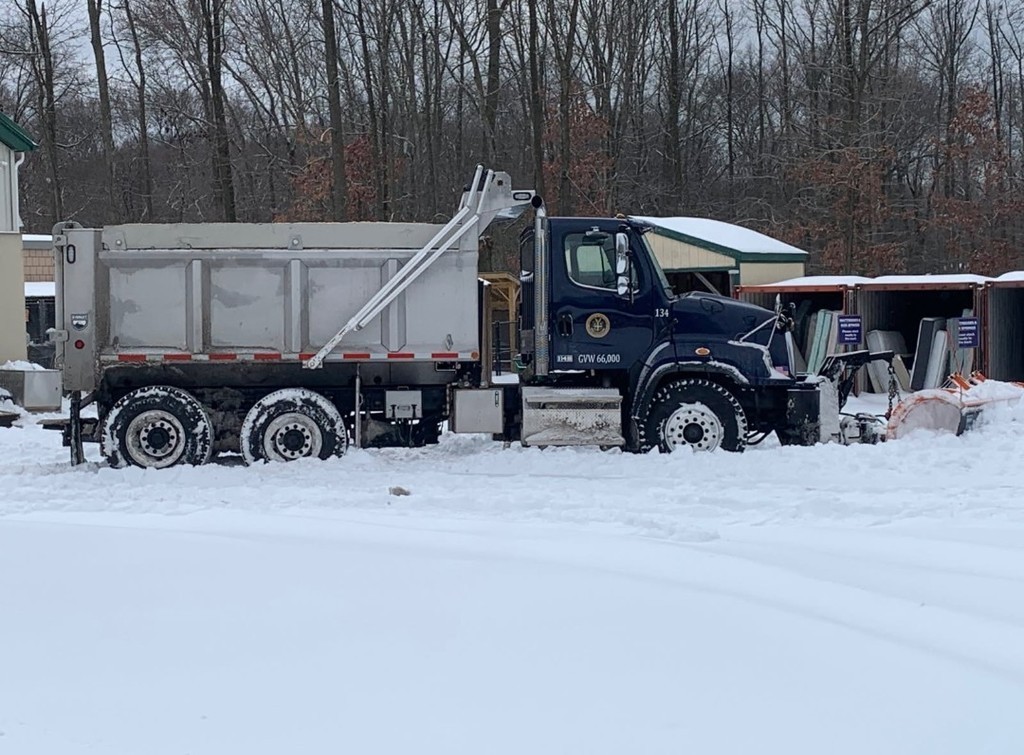
Weather related emergencies remain a future budget challenge, Business Administrator Anahita Feltz said.
In a tough budget year, township officials presented a budget that offers “continued commitment to fiscal responsibility, transparency and sound stewardship.”
It took many hours, which Mayor Debbie Walker, emphasized as she opened up the budget hearing and final adoption of the 2026 municipal budget at a Township Council meeting on April 7.
“All the hard work ensures we can provide services to our residents,” she said, noting the team – led by Finance Director Dawn Swoboda, and Business Administrator Anahita Feltz – started to work on the 2026 municipal budget in August 2025.
The Township Council adopted the $75.032 municipal budget that will see an increase in the municipal property tax rate.
The budget was introduced at a meeting on March 23. The Township Council approved the budget after a public hearing on April 7.
The municipal tax rate is estimated to be $1.055 per $100 of assessed value in 2026, which reflects tax increase of $0.025 over 2025 of $1.030. The owner of a house assessed at the town average of $158,052 for property tax purposes will pay $1,667. This is an increase of $39 over the prior year’s municipal tax increase.
The municipal library purposes expenditure category is included as an appropriation in the municipal budget. However, since 2011, the amount is deducted from the municipal tax levy in the calculation of the amount to be raised by taxation for municipal purposes, Swoboda said.
The 2026 minimum state-required funding for the Old Bridge Public Library is $4.4 million which reflects an increase of $355,332 over 2025 at $4.1 million.
The associated tax rate is estimated to be $0.117 per $100 of assessed value in 2026, which reflects an increase of $0.009 in the tax rate over 2025 at $0.108.
For an average home assessed at $158,052, the municipal library tax increase would be $14 from $171 in 2025 to $185 in 2026.
Walker noted the municipal portion makes up 16% of a homeowner’s tax bill. It covers most municipal services provided to the residents of the township including public safety (police protection and emergency services); public works (roads, recycling, snow removal); health and senior services, parks and facilities; recreation programs and community development (engineering, planning, zoning, building, code enforcement).
The remaining portion of the tax bill – 84% – funds the Old Bridge Township Public Schools, Old Bridge Public Library, Middlesex County government, Middlesex County Open Space program, and the township’s four fire districts – Laurence Harbor, Cheesequake, South Old Bridge and Madison Park.
“This budget has been shaped by a very challenging financial environment,” Feltz said. “Rising health insurance premiums, higher utility and fuel costs, increased pension obligations and contractual increases have all placed added pressure on our operations.”
As discussed during budget workshops, a “thoughtful discipline and strategic approach to budget development” was taken, Feltz said.
“In response, the administration conducted a comprehensive line by line review of all expenditures,” she explained. “Working collaboratively with our department directors and finance team, we identified efficiencies and targeted reductions where appropriate.”
The team focused on controlling costs and prioritizing essential services to ensure the township continues to meet the needs of residents in a responsible and sustainable way.
“Through this process, we were able to close budget gaps without compromising performance or services,” Feltz said.
2026 expenditures
- Salary and Wages expenditure category is the largest expenditure in the budget. It increased by $1.04 million, 3.45%, from $29.99 million to $31.03 million in 2026.
In addition to contractual increases and minimum wage increases, the 2026 budget includes funding for one new full-time position in the police department.
- The other operating expenses increased by $984,554, 4.48%, from $21.96 million in 2025 to $22.95 million in 2026.
Feltz noted the biggest increase has been in health and liability insurance. The township just moved from the state health benefits into HIP New Jersey Health Coverage to try to help minimize costs starting April 1. “It’s still a large chunk of the increases,” she said, adding they will go out to market every year.
- Municipal debt service expenditure category has increased by $503,525, 9.01%, from $5.59 million in 2025 to $6.09 million in 2026.
- The Statutory Expenditure category has increased by $312,057, plus 4.31%, from $7.24 million in 2025 to $7.55 million in 2026.
- The deferred charges expenditure category has increased by $298,772 from $62,302 in 2025 to $361,074. This includes contribution to the Old Bridge Sports Arena, Swoboda said.
- The capital improvement fund expenditure category increased by $145,000, 51.79%, from $280,000 in 2025 to $425,0000 in 2026.
- The proposed capital budget for 2026 is expected to be $4.5 million for curbing, drainage, facilities and road improvements, parks and playground improvements, replacement of equipment and vehicles for various departments and divisions.
- The Reserve for Uncollected Taxes expenditure category increased by $1.46 million from $2.12 million in 2025 to $4.58 million in 2026.
2026 Revenues
- Total municipal revenue, including the Municipal library tax levy, has increased by $5.41 million, plus 7.32%, from $74.03 million in 2025 to $79.45 million in 2026.
- The Fund Balance revenue category has decreased by $500,000 (minus 3.85%) from $13 million in 2025 to $12.5 million for 2026
- The miscellaneous revenues category has increased by $4.21 million, plus 71.91% from $5.86 million in 2025 to $10.07 million for 2026 – interest and costs on taxes, rental fees, interlocal service agreements, fees and permits, PILOTs (payment in lieu of taxes), cable franchise fees, licenses, hotel tax, and state and federal grants.
- The Uniform Construction Code fees revenue category has not been changed for 2026. The proposed budget anticipates the same level of funding as last year at $2.1 million
- The State Aid revenue category has not changed for 2026. The proposed budget anticipates the same level of funding as last year at $6.35 million.
- The Municipal Court Fines and Costs revenue category has increased by $75,000, 17.65%, from $425,000 in 2025 to $500,000 for 2026.
- The interest on investments and deposits has not changed for 2026. The proposed budget anticipates the same level of funding as last year at $550,000.
- The Receipts from Delinquent Taxes revenue category has increased by $100,000, 6.67%, from $1.5 million in 2025 to $1.6 million for 2026.
- The Amount to be Raised by Taxation revenue category has increased by $995,134, 2.57%, from $38.65 million in 2025 to $39.64 million for 2026.
The Cost of Living (CAP) Adjustment enacted by the state requires each municipality to limit any increase in said budget up to 2.5% (annually set by state) unless authorized by ordinance to increase it to 3.5% over the previous year’s final appropriations.
For Old Bridge, the proposed final budget appropriation for 2026 is $59,378,724, which is $36,819.02 below the state mandated cap base of $59,415,543.
The proposed municipal tax levy for 2026 is $39,641,374, which is $1,242,578 below the state mandated property tax levy cap of $40,863,952.66.
The potential future budget challenges remain the same, Feltz said, including on the national, state, and local economic level including inflation, fuel, utilities, and contracted services.
Other challenges include weather related emergencies; contractual/statutory cost increases – all nine union contracts were approved in 2025 and will run through 2028; accumulated time payouts for retirees; order to implement a municipal wide reevaluation and related costs; tax appeal refunds and new and unfunded state mandates.

