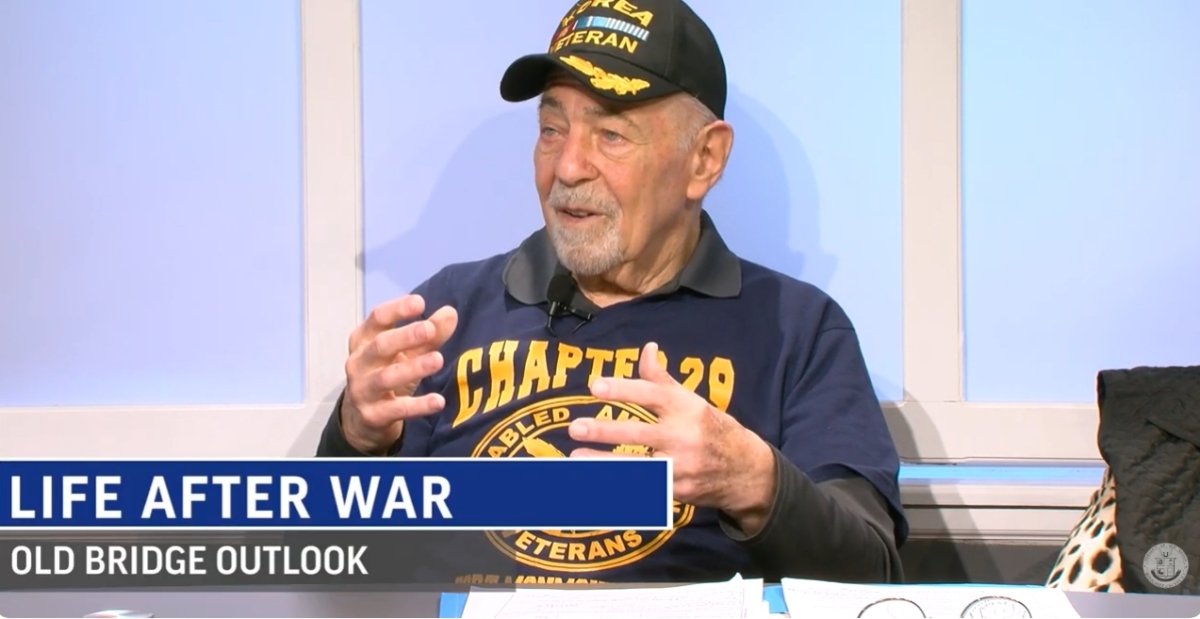
Korean War veteran Joseph Shafran will serve as the township’s Grand Marshal in the upcoming Memorial Day Parade.
The parade will kick off at Laurence Parkway and Ely Avenue at 9 a.m. on Monday, May 25.
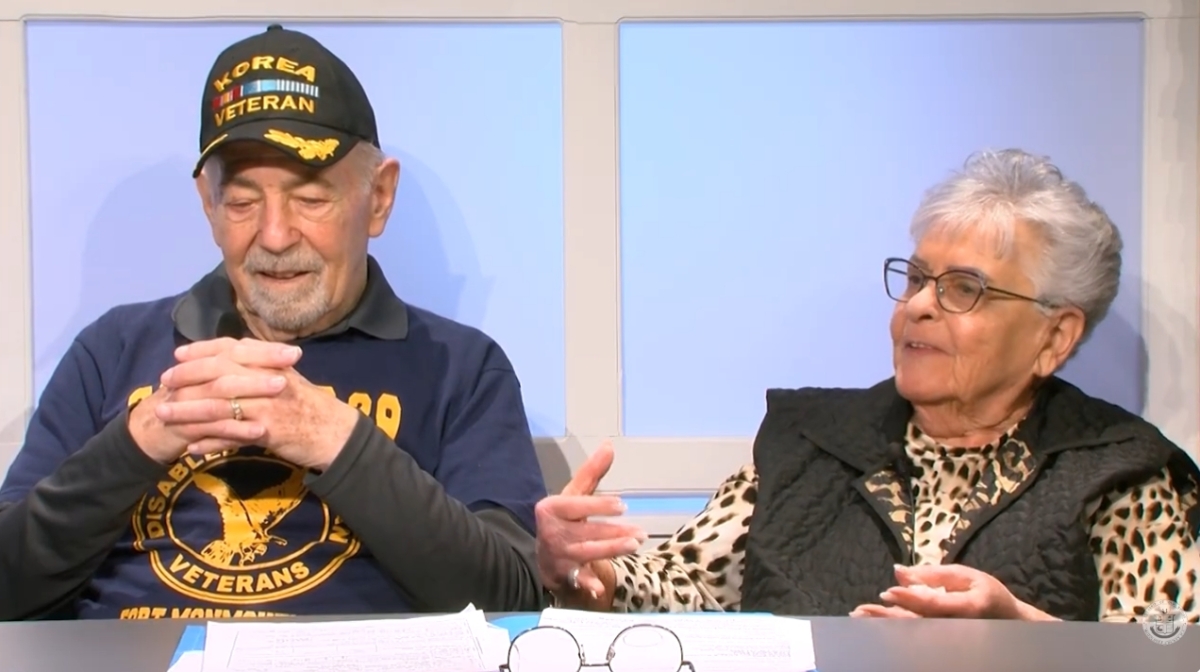
Ahead of the parade, Shafran, with his wife Dorothy, sat down with Mayor Debbie Walker and Old Bridge TV, hosted by David Lee Hernandez Jr., to candidly talk about his service.
He was born in Brooklyn, N.Y. and was drafted in 1952. He served as a Private 1st Class officer in the U.S. Army with both the 40th and 2nd Infantry.
Shafran returned home with a Bronze Star Medal, meritorious service medal, and the Korean Service Medal, and other honors, as well as lasting reminders of his service.
“For more than 70 years since, Joseph has lived a life of dedication to his beloved wife Dorothy, their family, his career, and especially his fellow veterans through the Disabled American Veterans Chapter 29,” Hernandez said. “Today, we celebrate his sacrifice, his resilience, and the example he continues to set.”
Shafran grew up during the Great Depression. He lived in Brooklyn near the Brooklyn Navy Yard. When the attack on Pearl Harbor took place, he could feel what that did to all the soldiers and sailors.
When his service began, he remembers it was snowing and miserable as they boarded a bus from Manhattan to go to Camp Kilmer in New Jersey.
When the military orders came down, they boarded a bus to Newark Liberty International Airport and flew to Kansas City, Kansas. Then they took a bus and drove all night long to Fort Smith – Camp Chaffee – in Arkansas for 16 weeks of basic training.
Shafran recalled seeing photos warning soldiers of black widow spider and snakes.
“… Being in Brooklyn, we didn’t have this,” Shafran said.
It was a “scary” beginning.
Hernandez asked Shafran how he felt being away from Brooklyn.
Shafran, who was 18 years old at the time, admitted he “cried like a baby.”
“I was a very happy person in spite of what we lacked in a house.. it was a very happy house,” he said. “You have to understand the type of mother that I had. We would come in the house, take our jacket and throw it on the couch. My mother made all kinds of dinners to satisfy her kids.”
In the Army, he didn’t have his mother or a place to throw his jacket.
“This was a whole new beginning,” Shafran reflected.
In basic training is where he learned how to drive (he never had a car license) large trucks, learned how to read coordinates and learned about 105 howitzers.
“The 105 was a very important gun in Korea because Korea was very mountainous,” Shafran explained. “The 105 was very agile so you could move it and it did a lot of damage.”
Shafran – now 94 – recently started sharing his experiences of 50 to 60 years ago.
When in Korea, “fire missions were all done at night,” he said.
“We were fighting against an enemy that had nothing but manpower and we were draftees.”
Shafran noted they didn’t have the latest equipment.
“When I got there, we had equipment from the second world war.”
Traversing Korea’s mountainous terrain, Shafran recalls the smell of fertilizer.
Fire missions were the most intense.
“… You didn’t realize what you were doing,” he said. “You didn’t realize what was happening.
“… There’s nothing so terrible to serve in a war with the fire missions, with the ammunition, not knowing if you’re being attacked.”
Those times during the war “affect you afterwards when you came out of the service,” Shafran said.
Shafran noted the water in Korea was full of chlorine.
“You had to learn how to drink beer,” he said. “The beer that they had was maybe 1% alcohol, maybe one … or maybe Coca-Cola.”
Food was terrible, he said. It was left over in cans from the second World War.
After service, Shafran came home with injuries from frostbite, neuropathy, and hearing loss. Hernandez asked how those injuries affected him when he came home.
“You had no time to think of yourself,” Shafran said when he came home. “You had a girlfriend. I wanted to get married. I wanted education. You didn’t think of anything [except for] making a career for yourself and going to work.”
“I think that’s an amazing part of your generation,” Hernandez told Shafran, “you had and sustained these injuries, and you don’t have time to worry about it.
“You got to get back and figure out life and start a family and start a career and start to provide for yourself.
“I think that’s what makes your generation, a very special generation.”
“He never spoke about anything of what he went through,” Dorothy said. “It’s through the years that went on that I myself heard from him. He didn’t want to know anything. He wanted to forget it.
“He couldn’t wait to get into normal clothes when he got home.”
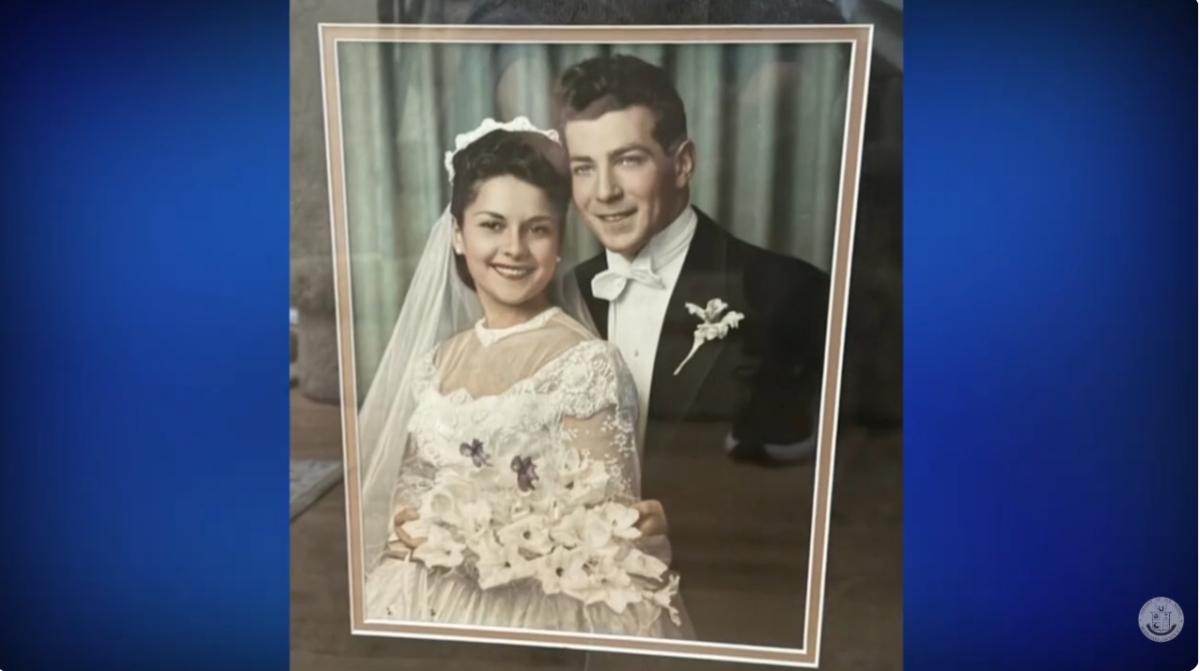
Joseph and Dorothy Shafran have been married going on 71 years this year.
“The first letter I got from her was 100 pages long,” Joseph said when he was in service. “She can write the way we speak and I was very fortunate about that.”
The couple didn’t have correspondence when he was away. Joseph made one call home from Japan, but the call was reversed because he couldn’t pay for it.
So hence the 100-page letter — a letter each day when Dorothy did not hear from Joseph.
When Joseph came home from serving, the couple got engaged and married. Dorothy still has and wears the ring, which was shown during the TV segment.
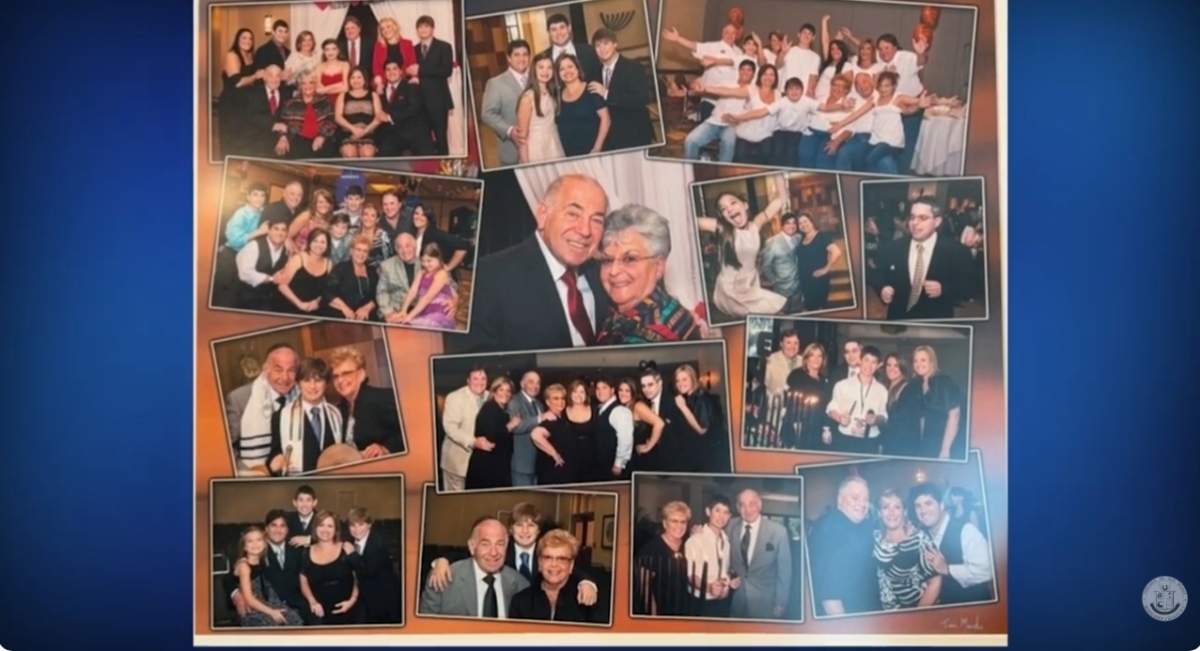
Joseph worked 25 years in the textile business. They have four children, which includes a child who they took in at six weeks old with special needs. He will be 50 years old in September.
As Joseph reflects on the younger generation and military service, he noted children are very fortunate today.
“They have more today than we had,” he said. “We are here living in a great place like Old Bridge. Here we have ice skating. You have horseback riding. You got whatever you want.
“I’m saying that we live in the greatest country in the world.
“We made it happen.”