

Time is running short for residents who want to influence a massive Amazon data center project that critics fear could bring significant environmental, economic and quality-of-life consequences to communities throughout the Delaware River region.
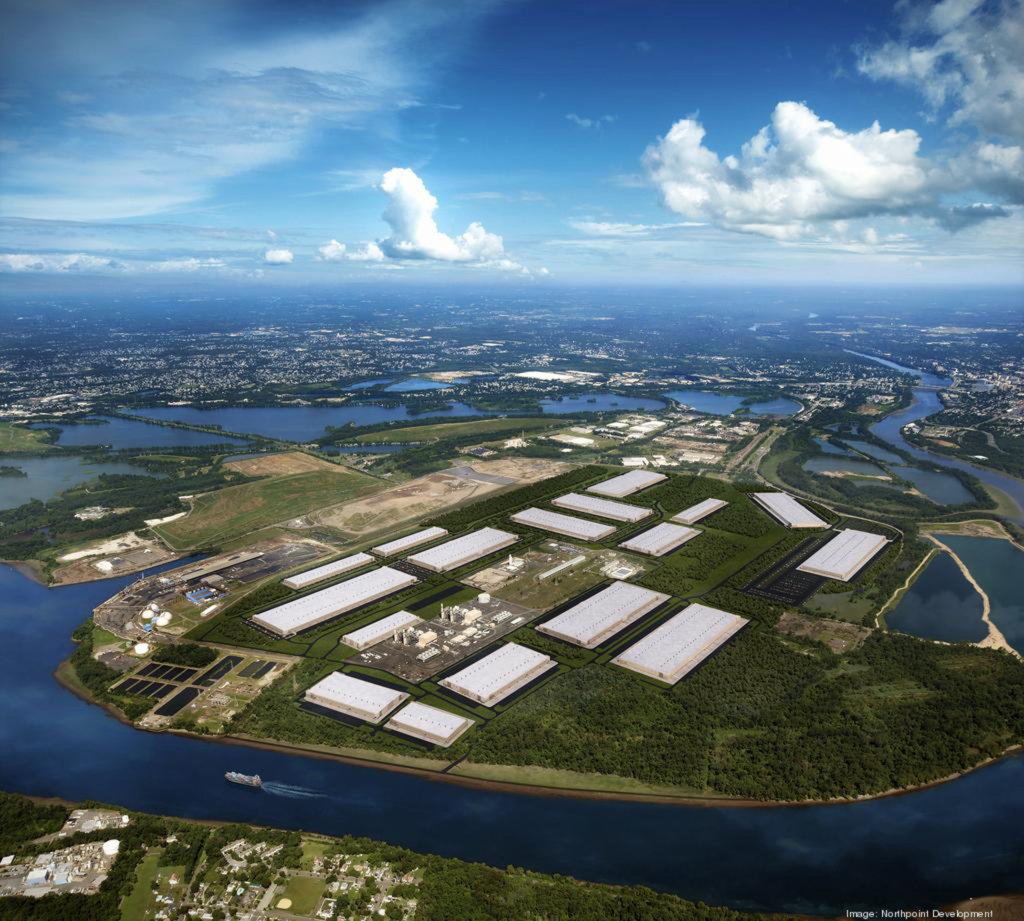
Aug. 16 is the final day to comment on a Pennsylvania Department of Environmental Protection air permit application connected to the fast-tracked data center campus of more than 3 million square feet set to open at the former Fairless Steel site in Falls Township, Pennsylvania.
Although the data center is located in Pennsylvania, its closest neighboring communities include several towns across the Delaware River and throughout central New Jersey.
Bordentown is only about 3.3 miles from the center, while Trenton, Hamilton, Ewing, Lawrence, Robbinsville, West Windsor, Princeton and Allentown are all within roughly a 15-mile radius.
Residents and officials from a number of those towns have raised concerns about air pollution from backup generators, continuous low-frequency noise and broader effects on the environment and quality of life.
The center’s substantial electricity demand could also add pressure to the regional grid and contribute to higher utility costs. PJM Interconnection, which manages the power grid in New Jersey, Pennsylvania and parts of 11 other states, required emergency measures during several heat waves this summer to maintain reliability and reduce the risk of blackouts.
The Falls Township project is not the region’s only major data center development. A 341,000-square-foot data center has also been approved for the former Princeton Nurseries property on Route 1 in South Brunswick.
That would leave several Mercer County communities effectively sandwiched between the South Brunswick project and a Falls Township campus that could total more than 3 million square feet. The combined electricity demands of the two projects will add significant pressure to the regional power grid.
* * *
Since local officials claimed they were caught off guard by the announcement that operating permits were being finalized, the project has generated more controversy and anxiety than comforting data. That is because data centers have become synonymous with rising utility costs, decreasing quality of life and property values, and an expanding menu of environmental challenges.
Such concerns have, in turn, created a “not so fast” reaction.
Recently, the online Data Center Watch report noted that the first quarter of 2026 “produced the largest single-quarter concentration of blocked and delayed data center projects on record, with at least 75 projects worth approximately $130 billion disrupted by local opposition.”
The Aug. 16 date marks the end of a 30-day comment period that started Saturday, July 18, and was announced at a July 14 PADEP-sponsored town hall meeting in Falls Township.
That event filled the Pennsbury High School East auditorium with anxious residents from both sides of the Delaware River who shared two common sentiments. One, they had no idea the center was being built. And two, they did not want it.
Their concerns were fielded by a panel of representatives from the Pennsylvania Department of Environmental Protection, PECO, Amazon, the Morrisville Municipal Authority and NorthPoint Development, the site’s owner and developer.
And while the panelists used charts and statistics in an attempt to convince the public that all was well, their arguments were undermined by an admission that no environmental impact study had been conducted, a refusal to guarantee their projections and the absence of a contingency plan.
It also did not help when none of the panelists could raise their hands when asked whether they lived near the site.
Despite some community antics, including an individual who tried to incite the crowd to chant and another dressed as Spider-Man, the hall was filled with people concerned that their lives were going to be upended without having a voice or being reassured.
So how did this regional situation start?
First, there was, or is, a convergence of interests. By the time the public became broadly aware of the project, the deck appeared to have been stacked by federal, state and local officials who had eased regulations and limited public scrutiny, facilitating its quick and quiet approval.
On July 25, 2025, President Donald Trump issued Executive Order 14318, “Accelerating Federal Permitting of Data Center Infrastructure.”
More of a manifesto, it states that AI data centers and the infrastructure that powers them are essential to national security, economic prosperity and scientific leadership. It also makes it a priority of the administration to facilitate the rapid and efficient construction of that infrastructure by easing federal regulatory burdens. While perhaps not directly tied to this particular data center, the order puts ideological muscle behind such enterprises.
A year earlier, in 2024, Pennsylvania Gov. Josh Shapiro issued Executive Order No. 2024-04. It is basically an “open for business” initiative hoping to attract major commercial projects to Pennsylvania by fast-tracking permits.
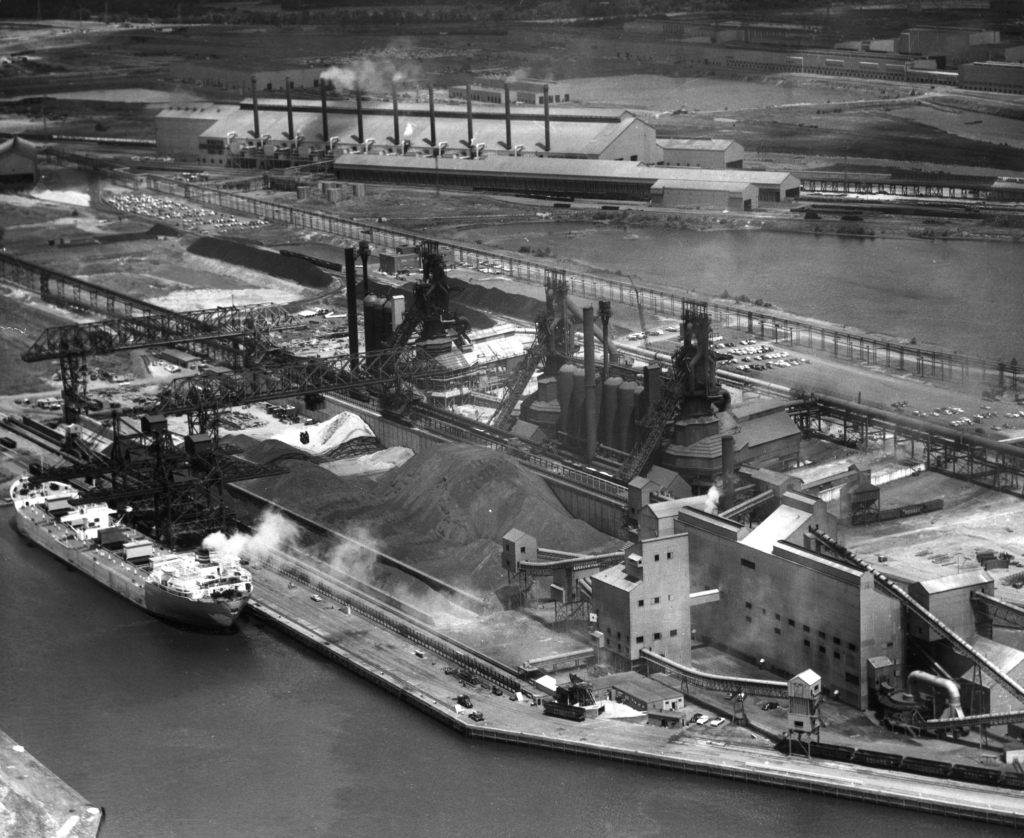
NorthPoint acquired the property in 2020 for $160 million. The developer has plans to build a major hub for e-commerce and logistics, with a project investment of $1.5 billion.
As part of the development’s incentive package, the relevant authorities in the region designated the site as a Keystone Opportunity Investment Zone from January 2021 through December 2035. The designation provides NorthPoint with significant tax breaks.
One of the approved projects for the company’s Keystone Trade Center was a warehouse operation.
The warehouse plan was dropped in early 2025 in favor of 10 buildings totaling about 2 million square feet for Amazon Web Services. Combined with an existing 1 million-square-foot building being converted into a data center, the full campus could total more than 3 million square feet.
The project was first made public in 2024 and approved by the Falls Township Board of Supervisors in 2025 after sparsely attended public meetings. Amazon’s involvement was announced in June 2025.
NorthPoint Development obtained a variance from the Falls Township Zoning Board allowing it to exceed standard township noise and decibel restrictions. NorthPoint said the building would include specialized features intended to reduce noise, and the zoning hearing board approved the variance.
The Falls Township Board of Supervisors also approved a nondisclosure agreement for the proposed data center project. Township officials said the agreement would not prevent anyone from filing a right-to-know request, although the township would notify NorthPoint when such a request was received.
By July 2026, Falls Township and Pennsylvania officials were celebrating the data center, which would include 280 natural gas-burning generators and three diesel generators, while Burlington County communities across the river had not been officially notified.

Community leaders and residents learned the hard way: through the announcement of the July 14 meeting to get the public ready for the opening of the data center in late summer or early fall 2026.
Since then, New Jersey community members and officials have been scrambling to understand the situation and determine how it will affect their communities.
That includes Bordentown City Mayor Stephanie Lagos, who attended and spoke at the July 14 session.
As she noted in a July 15 statement posted on a Bordentown Facebook page, she asked whether PADEP’s environmental reviews considered the full impact of the project, how expanded emergency generator use during periods of peak electricity demand was evaluated and whether communities across the river were considered in the agency’s permitting decisions.
“Unfortunately, the hearing provided very few clear answers,” Lagos said. “One thing that did become clear, however, was that PA-DEP said it did not conduct a project-specific evaluation of impacts to communities across the Delaware River because it determined such an analysis was not required.”
She added, “Just because this project is in Pennsylvania doesn’t mean its impacts stop at the Delaware River. Our residents deserve transparency, accountability, and a thorough environmental review of any project that could affect our air, environment, and quality of life.”
Amazon representatives disputed some of the concerns raised about the project. At the July 14 meeting, the company said the backup generators would operate only during power interruptions and for limited testing and maintenance. Amazon also said it uses conservative, worst-case calculations when estimating emissions and would closely monitor the equipment.
The company said outside-air cooling would be used for about 94% of the year, reducing the need for water-based cooling. An Amazon representative also said the community would not subsidize the project’s electricity use because Amazon would pay the full cost of supplying power to the site.
Amazon said it had already invested more than $827 million in the Falls Township campus and expected the completed project to create thousands of full-time jobs. The company declined to disclose information about its clients.
* * *
The public comment period is limited to the proposed PADEP air permit and does not address the project as a whole.
The application proposes the installation of 280 natural gas-fired backup generator engines and three diesel-fired emergency generator engines.
While the air quality report seems more like a perfunctory mechanism, an online Falls Township statement attempts to be more convincing and notes that “DEP Air Quality Program Manager Jillian Gallagher said her agency will ensure that Amazon complies with all state and federal laws, adding that her team ‘takes this job seriously.’ If Amazon does not meet the requirements, DEP will not issue the permit.”
If the “all” state and federal laws required are related to noise, existing laws are weak or nonexistent.
For example, on the federal level, the nonprofit Quiet Communities announced July 19, 2026, that the U.S. District Court for the District of Columbia had ruled that the Environmental Protection Agency had failed to comply with mandatory obligations under the federal Noise Control Act of 1972 for more than 40 years.
And, unlike New Jersey, Pennsylvania does not have statewide legislation addressing noise issues.
As for the decibels noted earlier, a recent report from the Elk River Data Center Group in Minnesota notes that data centers emit constant, low-frequency noise that is structurally different from other industrial sources.
The report said facilities had measured between 40 and 59 dB(A) on residential properties and remained within applicable limits, while neighbors reported sleep disruption, difficulty concentrating and avoidance of outdoor spaces.
The Falls Township data center’s location on a peninsula surrounded by the Delaware River and Van Sciver Lake indicates an additional condition: refracted sound traveling across water.
That results in a bending effect that allows sound to move without opposition and to be heard clearly. For example, recent boombox parties in Falls Township were heard clearly by residents in Bordentown and other towns miles away
Since the area is also surrounded by highways with ongoing traffic, trains and air traffic from several airports, including Trenton-Mercer and Joint Base McGuire-Dix-Lakehurst, they can be overwhelmed by another level of noise.
Bordentown resident and professional acoustics engineer John Baldassano attended the July 14 meeting and asked about noise and safety. However, as he shared in an email, he had other thoughts in mind.
“As noise from emergency operations tends to be ignored as a temporary condition to be tolerated by everyone else, my questions regarding the generators, speech interference, and life safety were intended to call out that there are actually real impacts associated with these events given the significant quantities of equipment planned and hold Amazon accountable,” he said.
Baldassano said residents within 2 miles of the facility could receive noise emissions of 50 dBA or greater, with the potential to disrupt sleep.
He added that while Amazon had designed the facility smartly by placing mechanical equipment indoors, noise would still radiate through louvers in the facade and through the roof.
“Regardless of this, there are still significant gaps in their analysis that need to be filled like a thorough impact analysis that compares expected sound levels to ambient sound levels measured at points of reception,” he said.
Baldassano also said Amazon considers information about its mechanical analysis proprietary.
“Keeping this information hidden also prevents others like myself from verifying their claims,” he said.
Also attending and asking a question at the July 14 meeting was Bordentown resident and data center opponent Katie Ireland.
“I was on the Save Hamilton team and still partner with the Climate Revolution Action Network (CRAN). Both teams collectively have stopped seven data center projects from Hamilton, New Brunswick, Mansfield Township, and others,” she said.
When asked how the Falls Township project is different from others she has been involved with, Ireland said efforts are more difficult because of the lack of referendums and recalls and problematic behavior such as the use of NDAs.
Additionally, she said, “No environmental impact report was done for local communities less than five miles across the water. This project is also immediately next to marsh land, and extremely close to water which makes it more hazardous.”
Ireland has other concerns, especially “the lack of action I am seeing from local community members.”
“So many people are responding like it’s a done deal or there’s nothing we can do, but we only had success from those previous seven projects because we had such strong community action on our side,” she said.
Ireland also connects her opposition to broader political and ethical objections involving the use of Amazon products by government agencies, surveillance and immigration enforcement, labor practices, environmental justice and the potential uses of the data center’s technology.
She said Amazon’s refusal to disclose information about its partners raises questions about how the facility may ultimately be used and whether the company will be held responsible for its effects on surrounding communities.
Ireland said that if the overall community does not want to see this project move forward, it needs “to push back immediately and repetitively.”
She urged residents to demand additional hearings, an environmental impact study and protections under Pennsylvania law.
“The goal should always be fully stopping this project entirely,” she said. “They do not have all their permits. There is still hope no matter what because it is just a building and a business at the end of the day.”
Like Lagos, Ireland recommends that community members leave public comments with DEP regarding the air permit.
“If enough people comment to DEP, request hearings from DEP and Falls boards, demand a halt on the project, demand environmental impact studies, and ask that the project be stopped, and do this often, then we will have a fair chance,” she said.
Recently, Shapiro seems to have gotten some whiplash from his fast-track policies and, in May 2026, unveiled the Governor’s Responsible Infrastructure Development, or GRID, Standards.
The initiative establishes “clear guardrails and accountability standards for data center development in the Commonwealth of Pennsylvania.”
The standards outline steps developers must take to demonstrate that proposed projects provide value to local communities, mitigate or offset their effects and are developed responsibly.
That suggests data center developers need to consider something Ireland mentioned earlier: Pennsylvania’s Environmental Rights Amendment, Article 1, Section 27, of the Pennsylvania Constitution.
The amendment states that the people have a right to clean air, pure water and the preservation of the natural, scenic, historic and aesthetic values of the environment. It also requires the commonwealth to conserve and maintain public natural resources for the benefit of current and future generations.
Comments on the proposed air permit can be sent to ra-epseroaqpubcom@pa.gov through Aug. 16.
To learn more about the project and its opposition, visit amazoninnovationinpa.com, fallstwp.com or padatacenterinfo.org.
Dan Aubrey is a former arts and entertainment editor for U.S. 1 newspaper who lives in Bordentown. He is also a former state-certified noise investigator.

