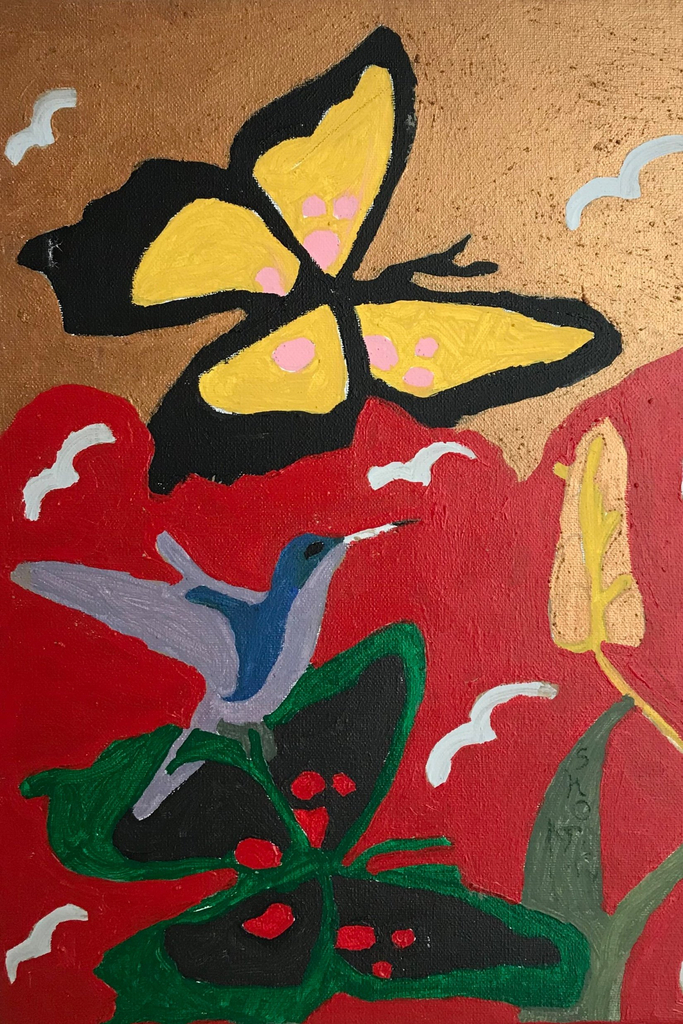
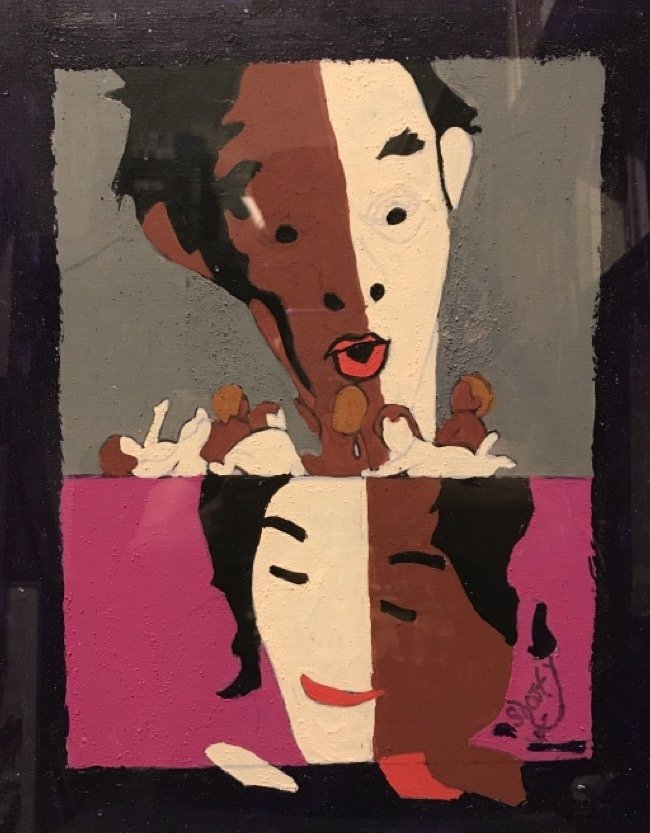
Herman “Shorty” Rose found a way to turn his life around through art. Then he spent the next 25 years helping others discover that creativity could change their lives, too.
Rose, a self-taught Trenton artist who overcame incarceration and personal hardships to become a founding member of one of the region’s most recognized grassroots arts organizations, died Nov. 11 at age 73. His death was confirmed in an obituary published Nov. 19 by Hughes Funeral Home in Trenton.
His death marks the loss of a major figure in Trenton’s cultural and community life, a man whose influence extended beyond the arts to people who found purpose, opportunity and a sense of belonging through the organization he helped create.
Rose helped establish the Trenton A-Team, a collective of artists that began at the Trenton Area Soup Kitchen and grew into an organization whose members have exhibited their work in galleries, museums and community spaces throughout New Jersey. His legacy reaches beyond his own artwork to the opportunities he helped create for people whose talents might otherwise have gone unrecognized.
What began with a handful of people creating art at the soup kitchen eventually developed into an organization with its own studio, regional exhibitions and outreach programs. Its latest undertaking, a mobile art studio known as the Art Cart, carries that original mission directly into Trenton neighborhoods.
In September, two months before his death, Rose spoke with U.S. 1 arts writer Dan Aubrey for a feature about the Art Cart, a converted bookmobile that travels alongside the Trenton Area Soup Kitchen’s mobile meal service. Although the project was new, Rose saw the same need for creative opportunities that had inspired the original A-Team more than two decades earlier. “They’re talking about the kids getting in trouble — so make something,” Rose said, reflecting on the lack of activities available to young people in Trenton.
He also described the welcoming philosophy that had guided the A-Team since its beginnings at the soup kitchen. “Don’t just look, but come on in and show what you can do. Bring your talents here. Let people see your work.”
Born Aug. 10, 1953, in Trenton, Rose grew up on Lamberton Street in the city’s South Trenton neighborhood. His mother and uncle drew, while his grandmother drew and knitted, introducing him to creativity at an early age. Although he initially showed an interest in art, he abandoned it during his teenage years.
His nickname, Shorty, reflected both his stature and a neighborhood tradition of giving people familiar names. His father worked in construction, and Rose recalled holding jobs that included landscaping and picking potatoes in Burlington County. An accident left him with a physical disability that limited his employment opportunities. He eventually left school and served 12 years at Rahway State Prison, now known as East Jersey State Prison.
His artistic journey began in an unlikely place: prison, where another inmate awaiting execution taught him how to make objects from discarded cigarette packs.
In an autobiographical statement published on the Trenton A-Team website, Rose described learning to transform the packs into picture frames, lampshades, rugs and even dresses. He later expanded his work to include crosses, boxes and other decorative objects.
Working with paper, plastic garbage bags, tape and string, Rose developed techniques that required patience and resourcefulness. He fashioned his own sewing needle from a piece of plastic and stitched frames together rather than using glue, which he believed could damage the photographs. He selected pictures that complemented his frames and covered them with clear tape to protect them.
“Making frames lets my mind set on one thing. It keeps me out of trouble,” Rose said.
After his release, Rose returned to Trenton and began rebuilding his life. Around 1998, his sister, Annabelle, introduced him to the Trenton Area Soup Kitchen, where he found meals and eventually work washing dishes. He also continued his education and earned his GED.
Rose began helping frame pictures created by other artists at the soup kitchen. Those informal collaborations developed into weekly gatherings where participants shared materials, ideas and techniques.
When their work was displayed in the soup kitchen’s dining room, visitors began asking whether they could purchase the paintings and other creations. The interest helped inspire the formation of the A-Team Artists of Trenton, a cooperative that would eventually gain recognition throughout the region.
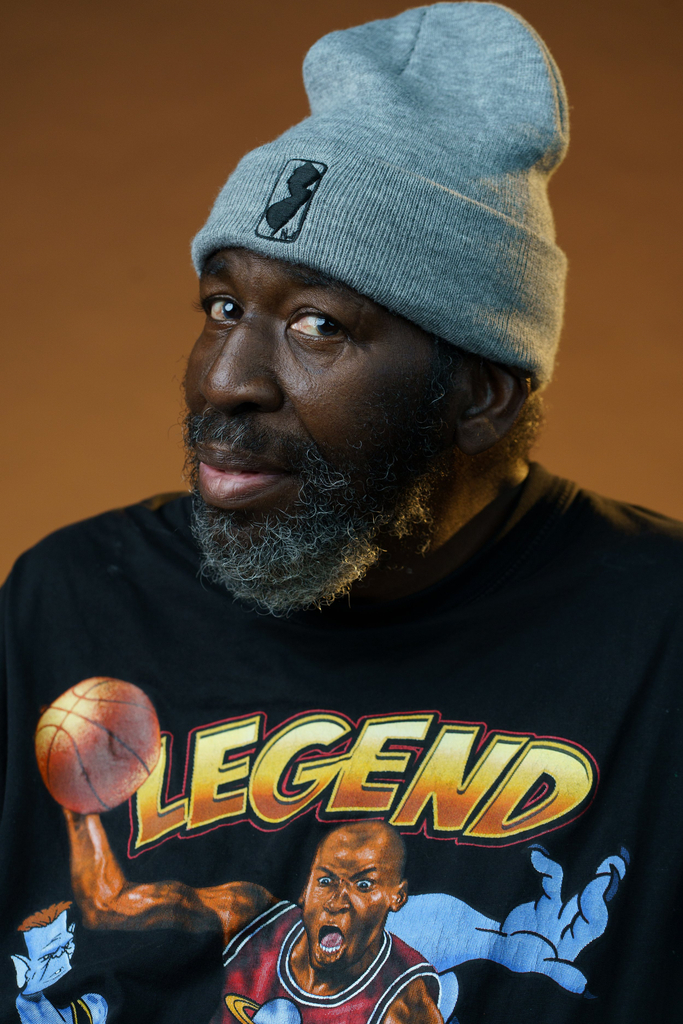
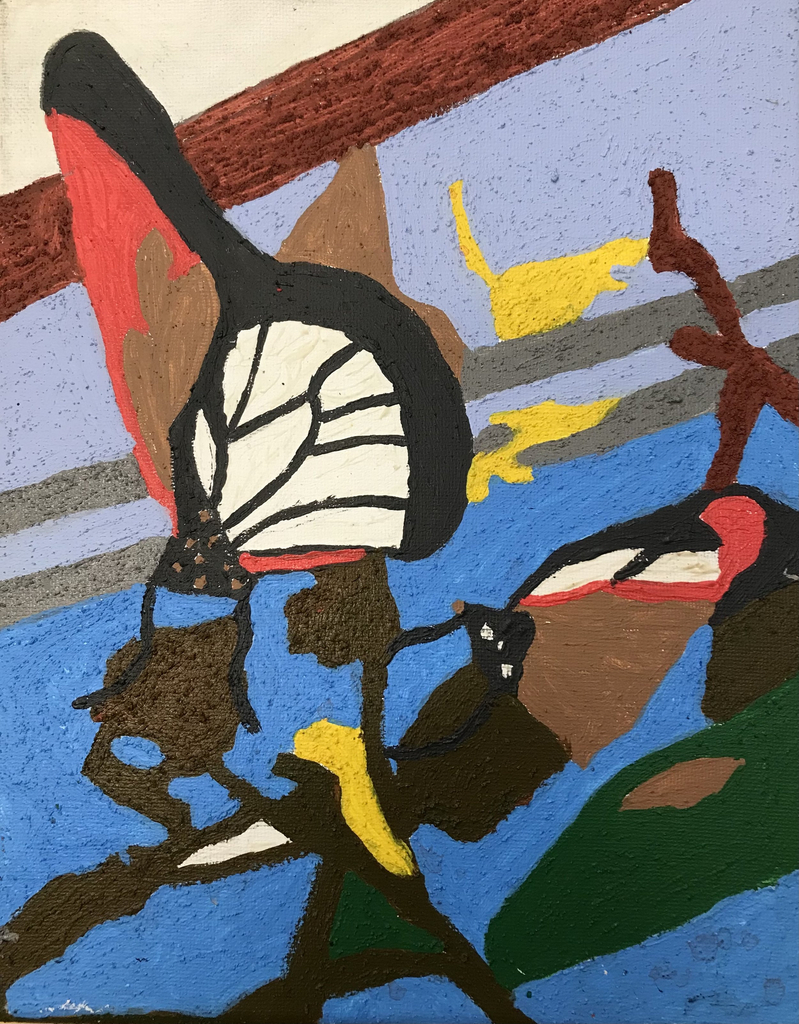
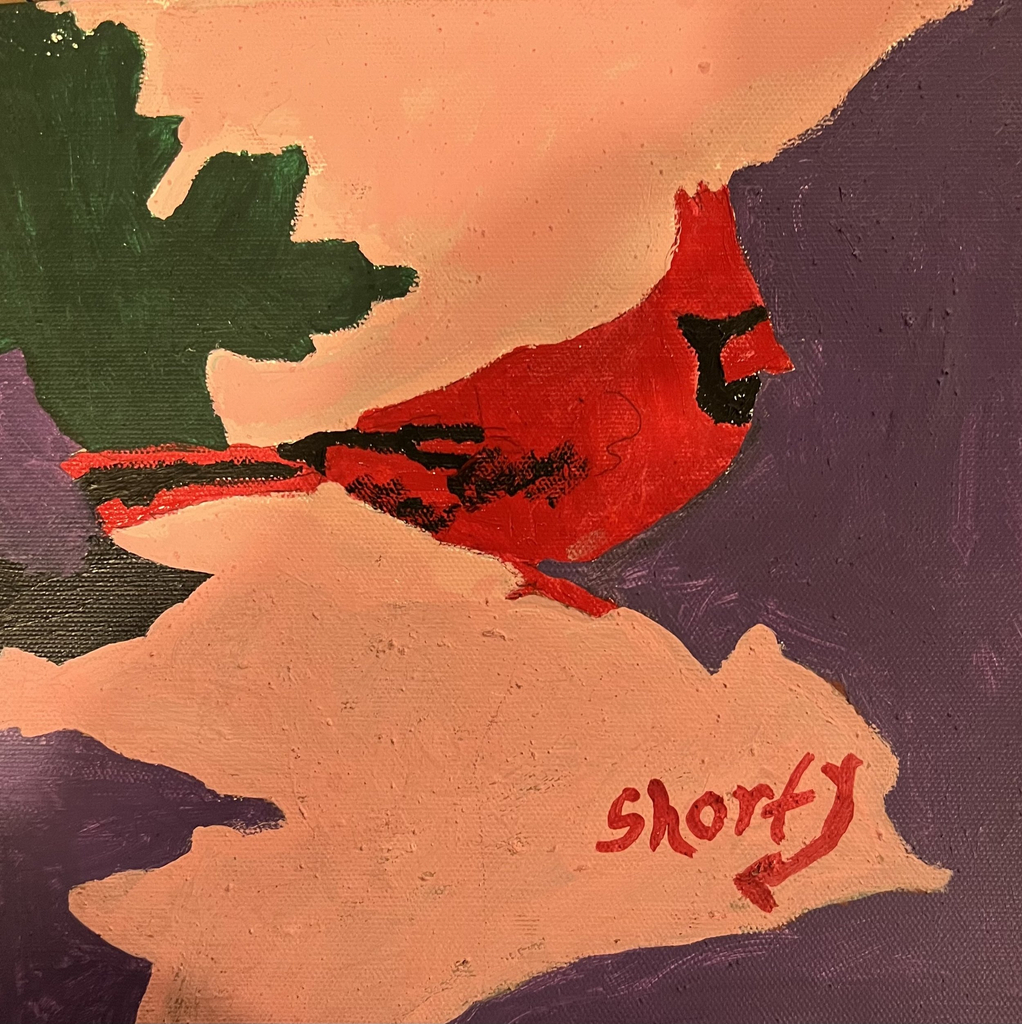
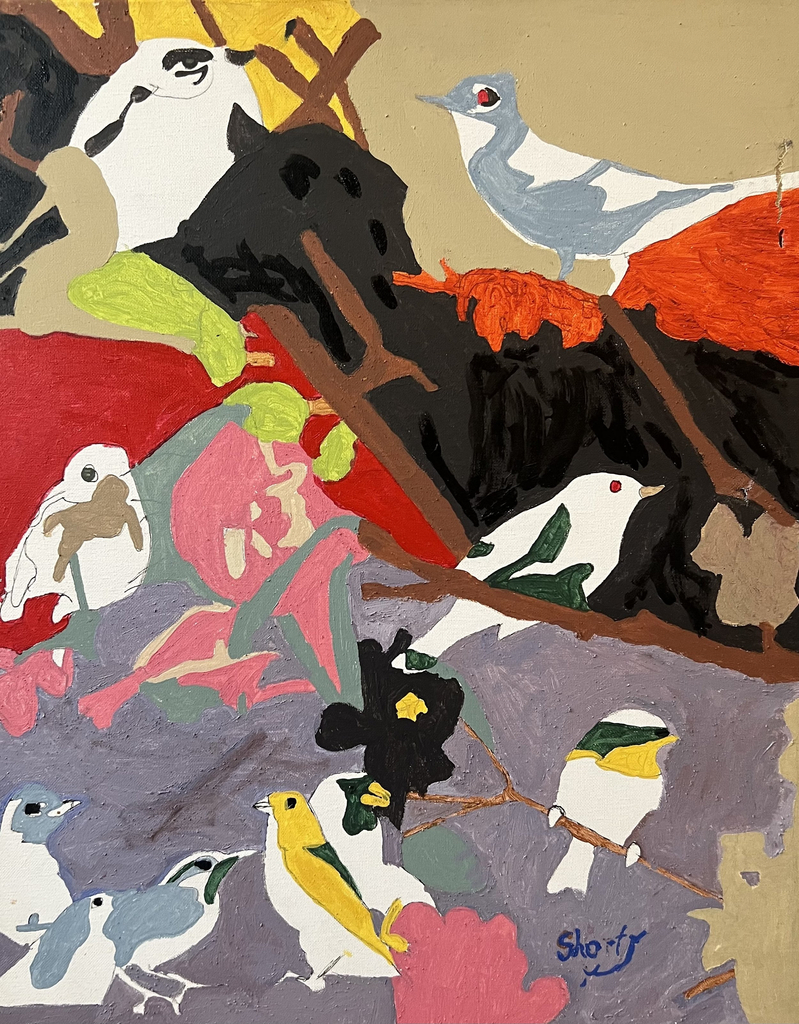
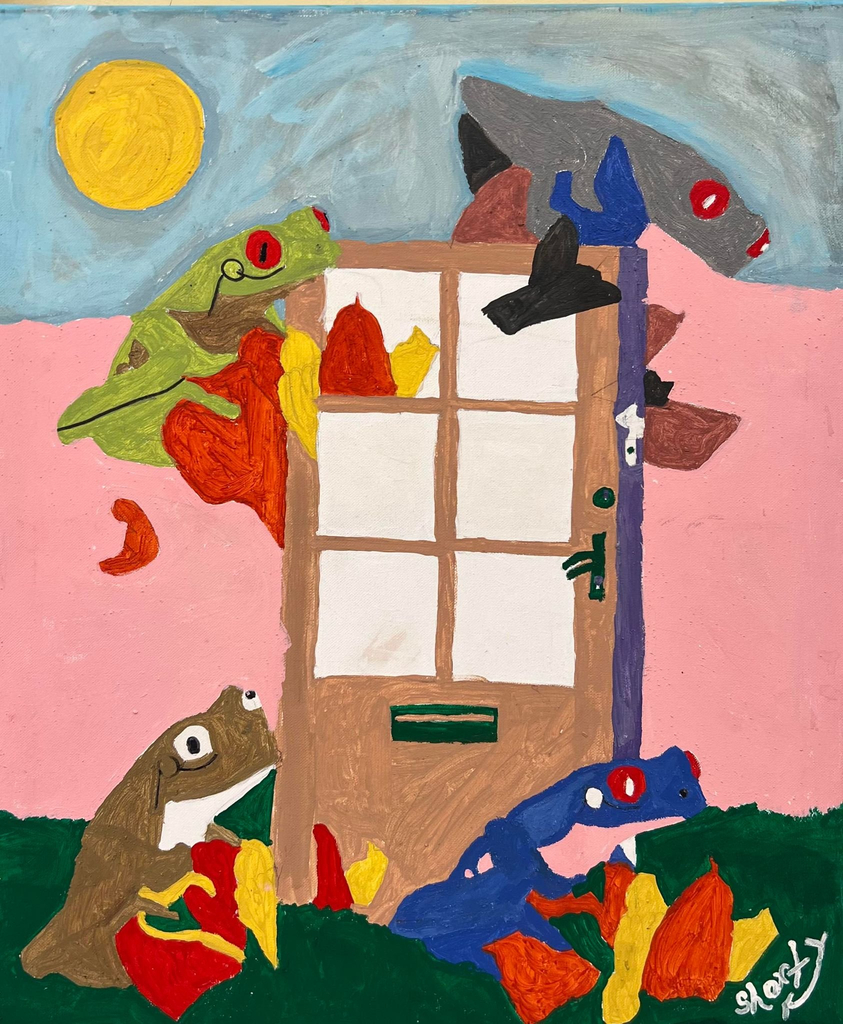
Rose initially concentrated on making frames and decorative boxes. A few years later, someone encouraged him to try painting and drawing, suggesting that he was capable of more than he believed.
He began experimenting with different techniques, including painting on glass and producing prints that he later learned were called monotypes. He continued making his distinctive frames while expanding into paintings and drawings of animals, birds and everyday scenes.
Rose had no formal artistic training and preferred to develop his own style rather than imitate the work of others.
In a June 2019 U.S. 1 profile, Rose told arts writer Dan Aubrey that creating art helped him avoid the circumstances that had troubled his earlier life.
“Art is keeping me out of the jail,” he said.
What began as a personal pursuit became a way for Rose to help others. He recognized that many people who came to the soup kitchen faced obstacles that made it difficult to develop their interests or receive recognition for their abilities.
Rose, his sister Annabelle, Brook Beatty, Frankie Mack and Carla Coleman, along with soup kitchen volunteer Susan Darley, helped establish the original A-Team around 2001.
The group began meeting in a multipurpose room at the soup kitchen on Escher Street, creating paintings, drawings, collages and objects from found materials. Participants did not need formal training or previous experience.
For some, the weekly gatherings provided an opportunity to develop talents they had never explored. For others, they offered companionship, structure and a place where their work would be taken seriously.
The paintings displayed in the dining room helped transform the atmosphere of the soup kitchen. People who came for meals could also enjoy an art exhibition, while participants gained the satisfaction of seeing their creations appreciated by others. As visitors began purchasing artwork, members also discovered opportunities to earn money from their talents.
The collective’s growing success attracted attention from arts organizations and galleries interested in self-taught creators. Its members became associated with what is commonly described as outsider art, work produced by artists operating outside traditional art schools and established artistic institutions.
Over the years, A-Team artists exhibited at venues including Artworks Trenton, the Trenton City Museum, the New Jersey State Museum, Grounds For Sculpture, the Arts Council of Princeton, McCarter Theater and West Windsor Arts.
In 2014, the Trenton Community A-Team became an independent nonprofit organization. It established Studio 51 in a converted historic carriage house at 51 N. Stockton St. in Trenton’s Creek to Canal Arts District, providing dedicated space for artists to create, exhibit and sell their work.
According to information published by the organization in 2024, artists received 70% of proceeds from artwork sold through Studio 51, with the remaining 30% supporting supplies, rent, maintenance and staffing.
The collective also organized workshops and outreach programs with organizations including the Trenton Rescue Mission and The Arc Mercer.
Although the A-Team developed a more formal structure, the relationships among its members remained central to its identity.
Rose considered the artists an extended family. During an April 2024 interview for a U.S. 1 cover story about the ANEW Artists Alliance, he referred to himself as the group’s “father,” prompting fellow founding artist Brook Beatty to jokingly suggest that she must be its mother.
The exchange reflected the close bonds among artists who had spent years creating together, encouraging one another and sharing their accomplishments.
Fellow artist Paul Norris explained during the 2024 interview that the group’s members wanted their work to be appreciated on its own merits, rather than being defined by their association with the soup kitchen.
“We encourage one another; we help one another,” Norris said.
He described the recognition the artists had received as a dream come true, emphasizing their desire to be seen as artists rather than simply as people in need of assistance.
The collective’s influence was also evident in the ANEW Artists Alliance, established in 2021 by artists with longstanding connections to the original A-Team. The alliance found a home through HomeFront’s ArtSpace program in Lawrence Township, which provides creative opportunities for people affected by poverty, homelessness and other difficult circumstances.
In April 2024, the alliance presented an exhibition at the Arts Council of Princeton’s Paul Robeson Center for the Arts. The show brought together artists whose individual styles reflected the range of experiences and talents within the group.
The U.S. 1 cover story, written by R. Schroeder, described Rose as a central figure in the alliance and an enthusiastic participant who continued producing artwork at a remarkable pace.
During a gathering at HomeFront’s ArtSpace Gallery, Rose displayed a stack of paintings he had completed during the previous week. Some incorporated acrylic paint mixed with sand, and one glowed in the dark.
His subjects ranged from birds and animals to a boy in a hammock and even a hamburger. Many incorporated pointillism, a technique using small dots of color, as a tribute to his late friend and fellow A-Team artist Patrick Bowen.
Art remained an important source of comfort. During the 2024 interview, Rose explained that he worked primarily at home and turned to painting when he was feeling discouraged.
His influence extended to other artists who had encountered the group through the soup kitchen. Lisa Lewis, for example, came to the Trenton Area Soup Kitchen seeking assistance preparing for her GED examination. There, she met Rose, who had pursued his own education after leaving prison, and began developing her artistic interests with encouragement from him and other members.
Rose remained determined to continue creating and supporting his fellow artists. At the conclusion of the April 2024 gathering, he spoke about the importance of keeping the collective’s work going and said he intended to continue making art for the rest of his life.
His commitment also extended to young people growing up in Trenton. Rose frequently expressed concern about the lack of activities and opportunities available to children in neighborhoods where he had spent much of his life.
In 2018, Rose and fellow artist Lisa Lewis received support through the I Am Trenton community grant program for Children are the Future of Art, an initiative intended to introduce children in the Old Trenton neighborhood to artistic activities.
The project reflected Rose’s belief that encouragement and access to materials could make a difference, particularly for people who might never have considered themselves artists.
That philosophy continues through the Trenton Community A-Team’s Art Cart, a mobile art studio that began traveling through the city in 2026.
Featured in the Sept. 2 issue of U.S. 1 and the Trenton Downtowner, the Art Cart was created from a former library bookmobile that had served New Bedford, Massachusetts. The vehicle was converted into a traveling studio and gallery equipped with art-making stations and a wheelchair lift.
The Art Cart accompanies the Trenton Area Soup Kitchen’s mobile meal service, bringing art supplies and working artists to locations where residents gather for food and other assistance. Visitors are invited to enter the vehicle, experiment with materials and create something of their own.
In the September feature, Aubrey described founding A-Team artist Brook Beatty inviting people waiting for meals on South Broad Street to take a look inside the converted bus. Some visitors were uncertain about participating, while others accepted the invitation and began working with the materials.
The project was supported by a $408,717 grant from the New Jersey Economic Development Authority’s Activation, Revitalization and Transformation program. The funding also supported public murals near the Trenton Transit Center and other initiatives intended to strengthen the city’s arts community.
For an organization that began with a few artists working together at the soup kitchen, the Art Cart represented a significant expansion. Instead of waiting for residents to visit a studio or gallery, the A-Team could bring creative opportunities directly into neighborhoods where access to arts programs might be limited.
By September 2026, Trenton Community A-Team board president John Kelly reported that hundreds of artists had participated in hundreds of exhibitions since the group’s beginnings.
Those accomplishments reflected the collective efforts of many people, including artists, volunteers, supporters and community organizations. Rose was among the founders whose determination helped establish the foundation for that growth.
His importance to Trenton’s cultural community was not limited to his paintings, frames or other creations. He helped establish a place where people could discover their abilities, develop friendships and gain recognition for work that might otherwise never have reached an audience.
The Art Cart brings that legacy into the neighborhoods where Rose spent his life. More than two decades after he found a creative outlet at the soup kitchen, the organization he helped build continues offering people a place to explore their talents and share their work.
A graveside service for Rose will be held at 10 a.m. Wednesday, Nov. 25, at Fountain Lawn Memorial Park, 545 Eggerts Crossing Road, Ewing Township, according to Hughes Funeral Home.
In an autobiographical statement published on the Trenton A-Team website, Rose reflected on the satisfaction he found in creating art and his determination to continue doing what he loved.
“By the grace of God, I’m gonna keep doing my art ‘til I can’t do it no more. When I’m doing art, I feel perfect.”