

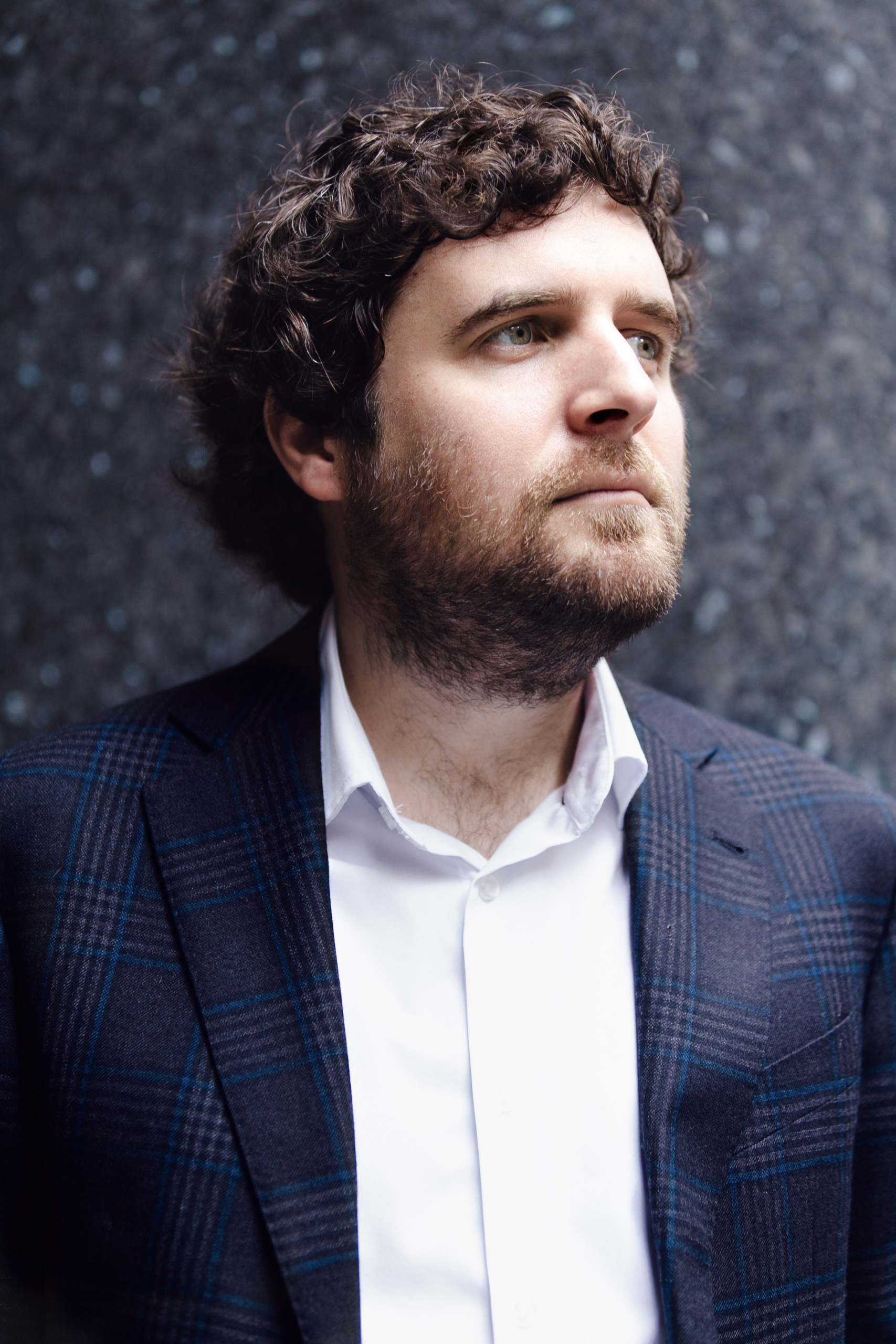
Matteo Neri’s musical career has taken many forms, from opera performance to pursuing composition and film scoring, taking him from his New Jersey roots to Los Angeles before ultimately bringing him back home.
Along the way, one idea has increasingly shaped his work: finding ways to make opera more accessible to audiences beyond its traditional base.
Now, the Hopewell composer has an opportunity to put that vision into practice close to home.
Neri is launching a classical music and opera festival at Hopewell Valley Vineyards, the 75-acre property owned by his father, Sergio Neri, a jazz pianist who first exposed him to music at an early age.
The festival debuted Aug. 16 with a sold-out Ella Fitzgerald tribute featuring Grammy-winning soprano Latonia Moore alongside the Guy Mintus Trio.
The performance served as an introduction to the festival ahead of its first full season in 2027, which will focus on exposing both established and new listeners to classical music and opera.
For Neri, the festival brings together his own musical journey with a goal that has followed him throughout his career.
“My whole thing with composing opera is part of my general sort of desire to make opera more accessible,” Neri said.
Neri’s path toward that vision began with his own early exposure to music. Through his father, music became a constant presence from an early age.
Growing up around that influence, Neri began imagining a future of his own in the field. Throughout his childhood, the type of musician he imagined himself becoming changed over time.
“In middle school, I wanted to be a country singer,” Neri said.
His direction shifted in high school when he heard Mozart’s “The Magic Flute” for the first time.
“Ever since then, I’ve wanted to be in opera in some kind of way,” he said.
Neri originally pursued that interest from the stage. He began his undergraduate education at the Manhattan School of Music, where he studied opera for two years. At the same time, he continued playing piano and composing.
Eventually, he realized his future with music was not as a performer.
“I just decided I don’t like performing really,” Neri said. “I think my talents lay more in composing and playing piano and even maybe conducting.”
Neri went on to complete his undergraduate studies in composition at Westminster Choir College in Princeton.
As he developed his own voice as a composer, Neri found that his style did not necessarily align with what he was encountering in contemporary classical music.
“A lot of it is very avant-garde, and I don’t fit into that,” Neri said. “I tend to write more tonal music.”
That pushed him to explore film scoring.
Neri earned his master’s degree in film scoring from Berklee College of Music, seeing the field as a place where his compositional style might be a more natural fit.
In 2015, he moved to Los Angeles to pursue a career in film scoring, but quickly realized that the industry was not the right fit for him.
After about six months, Neri moved back to New Jersey, where a friend’s suggestion redirected his focus to opera.
Neri’s best friend, Josh Page, a tenor and former “America’s Got Talent” finalist, helped provide a connection back to the opera world.
Through Page, Neri connected with opera singer Sean Panikkar, who posed a simple suggestion: Why don’t you write an opera?
Neri remembers thinking, “Yeah, why don’t I?”
For roughly the past decade, vocal music has become a central part of his work as a composer.
Among his most ambitious projects is “Escobar,” a Spanish-language grand opera centered on the downfall of Colombian drug lord Pablo Escobar.
The choice of subject reflects Neri’s broader philosophy about what opera can be.
Rather than limiting new operas to stories that primarily appeal to existing opera audiences, Neri is interested in subjects that might catch the attention of someone unfamiliar with the art form. Escobar’s prominence in popular culture gives audiences a recognizable story told in an unexpected way.
“People I talk to who have never heard an opera say they would like go to see it,” Neri said.
For Neri, reaching those people is an important part of opera’s future. In popular culture, perceptions surrounding the art form can make it intimidating to those who have never experienced it, often carrying associations with wealth and formality.
“I want people from rural, working-class areas and the inner city to want to come to the opera,” Neri said.
His concerns extend beyond perception to the way the industry operates. Neri sees expanding opera’s audience as a way to help it become less dependent on philanthropy and more sustainable through the people actually attending performances.
His experiences as a composer have also shown him how difficult it can be to bring unconventional ideas to the stage. Neri said he has encountered enthusiasm within the opera industry for ideas aimed at reaching new audiences, but also hesitation when it comes time to take risks on unconventional projects.
Eventually, those frustrations led him to consider creating something of his own. For Neri, that opportunity was close to home.
Hopewell Valley Vineyards offered Neri a setting unlike a conventional theater, along with existing infrastructure and a personal connection.
The idea for the festival began to take shape when Neri started discussing the possibility of bringing opera performances to the vineyard. Through his connection with Constantine Orbelian, general director and artistic director of New York City Opera, Neri began exploring the possibility of hosting some of the company’s concerts at the winery. Those conversations helped him see the property’s potential for something larger.
“I had the infrastructure here to really build, like, a legit opera festival,” Neri said.
The festival reflects many of the ideas that have shaped Neri’s work as a composer. At its core is a goal to introduce classical music and opera to new listeners while continuing to engage established audiences.
Its inaugural Ella Fitzgerald tribute is an early example of how Neri plans to strike that balance.
The concert featured internationally recognized soprano Latonia Moore, joined by the Guy Mintus Trio. While Moore is best known for her work in opera, she also has roots in jazz, making the program an opportunity to bring together two musical worlds and introduce audiences to opera through familiar jazz music.
“It’s a way to introduce people in a way that’s not scary,” Neri said.
The idea had already drawn interest. The Aug. 16 concert sold out within two weeks of tickets going on sale.
The vineyard itself plays an important role in creating the welcoming atmosphere.
Neri envisions audiences sitting around tables with the option to enjoy food and wine during a performance. Rather than entering a formal theater, he wants newcomers to feel as comfortable as they would attending another type of concert.
“I just want it to have a chill feel,” he added.
The goal is to pair the relaxed atmosphere of the vineyard with the level of artistry audiences would expect from a traditional opera house.
“I want to have the same caliber of artistry, but it’s more the environment and the way we market it,” he said.
Neri sees the rural setting as one of the festival’s defining characteristics. He points to destination-style opera festivals such as the Glimmerglass Festival in upstate New York, where audiences travel to experience performances outside a traditional urban environment.
He believes Hopewell can offer something similar.
Situated between the New York and Philadelphia metropolitan areas, the festival’s long-term vision is to establish Central New Jersey as an international destination for classical music and opera while maintaining the rural character that distinguishes it from a traditional concert venue.
Neri also hopes to establish a young artist series during the festival’s offseason, creating opportunities for emerging singers to perform in a more intimate setting.
Beyond the festival itself, his long-term vision includes a strong connection to the surrounding community, with school-based educational programming and partnerships with local institutions.
“The idea is to really involve the community,” Neri said.
Maintaining that connection will remain important even if the festival begins attracting audiences and artists from farther away.
“I don’t want it to seem like we’re leaving the community out and just trying to be international,” he said. “I want to do both things at the same time.”
Eventually, Neri hopes the festival will be able to mount full opera productions featuring orchestras and leading singers.
For now, he is approaching the vision incrementally.
“We’re just going one step at a time every season,” Neri said.
His ultimate ambition, however, is considerably larger.
“I know this is grandiose, but I want it to be one of the top festivals in the world,” Neri said.
For Neri, the festival represents the convergence of a musical career that has rarely followed a straight line.
From his early exposure to jazz and opera to his work as a singer, film scorer and composer, each turn has shaped the path that has brought him back to New Jersey. Along the way, those experiences also shaped how he thought about the future of the art form.
His work as a composer led him to question who opera is reaching, but more importantly, who opera is leaving out. For Neri, the festival is a chance to approach that question from a new direction.
The scale may be small to start, but his goal is to bring major artists to a setting that makes opera feel more accessible to audiences who may not otherwise seek it out.
For someone who has spent much of his career finding his own place within the music world, Neri is now working to create one in Hopewell and hoping a new audience will find its place, too.

