

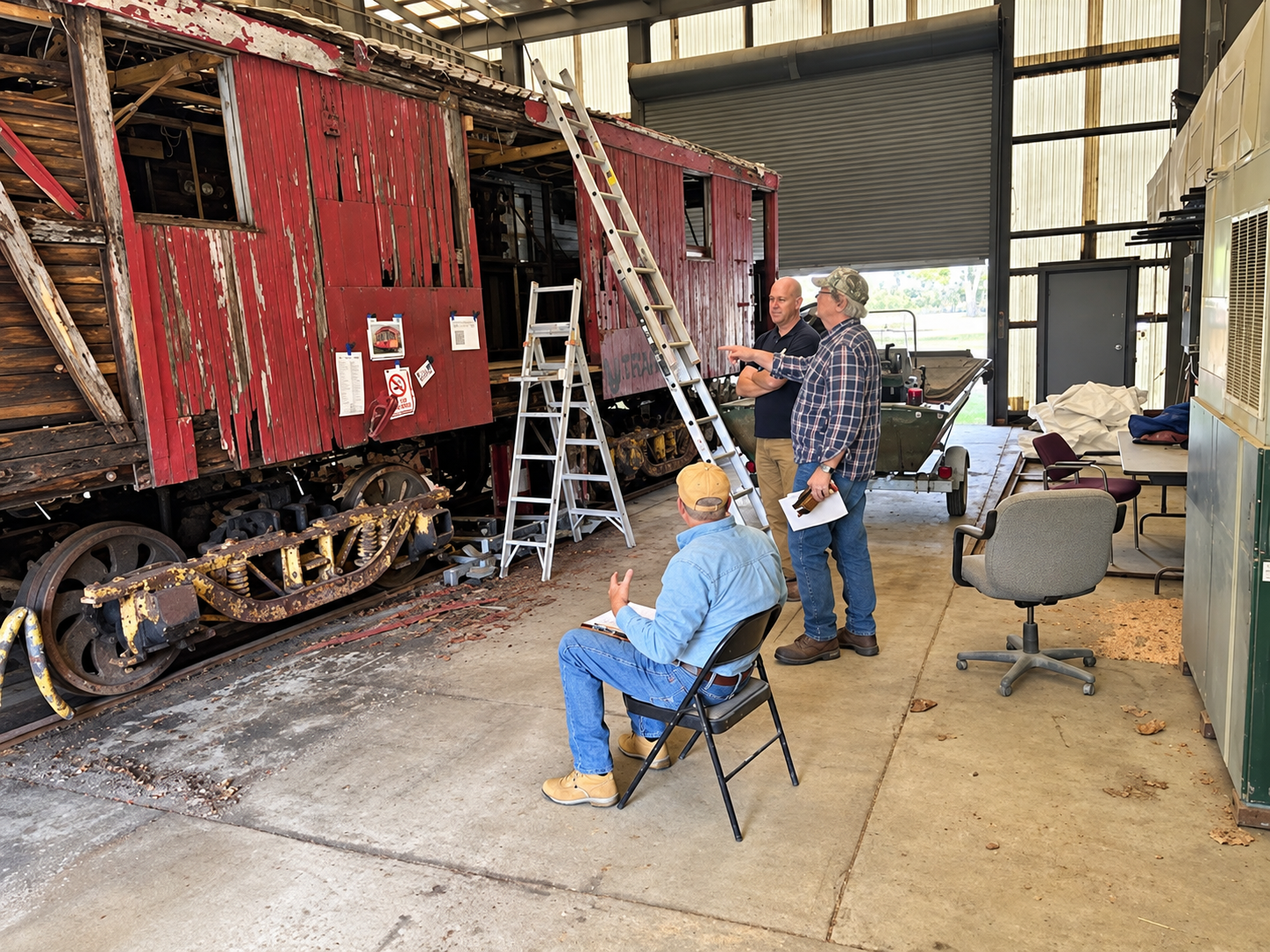
A trolley car that spent decades hidden inside a house in Hamilton Township is among two century-old railway vehicles Mercer County hopes to restore with the help of local volunteers.
The car, which once operated on an electric railway serving the region, was incorporated into a private residence after being retired from service. It remained there for decades until the house was scheduled for demolition and the historic vehicle was rediscovered.
Now Mercer County is partnering with Liberty Historic Railway, a nonprofit dedicated to preserving New Jersey’s transportation history, to restore the Hamilton trolley and a second historic car that was once used to clear snow and ice from railway tracks.
The two vehicles date to the early 1900s, when electric trolley lines connected Trenton with surrounding communities and provided an important means of transportation for residents traveling to work, school and other destinations.
“These trolley cars tell an incredible story about how people lived, worked and traveled through Mercer County more than a century ago,” Mercer County Executive Dan Benson said. “By partnering with Liberty Historic Railway, we have an opportunity not only to preserve these pieces of our history, but to give residents a hands-on role in bringing that history back to life.”
The Hamilton trolley’s unusual history makes it a particularly interesting preservation project. Although the county has not provided details about the house where it was discovered, its original route or how it became part of the residence, the vehicle’s survival offers an opportunity to preserve a piece of the region’s transportation past.
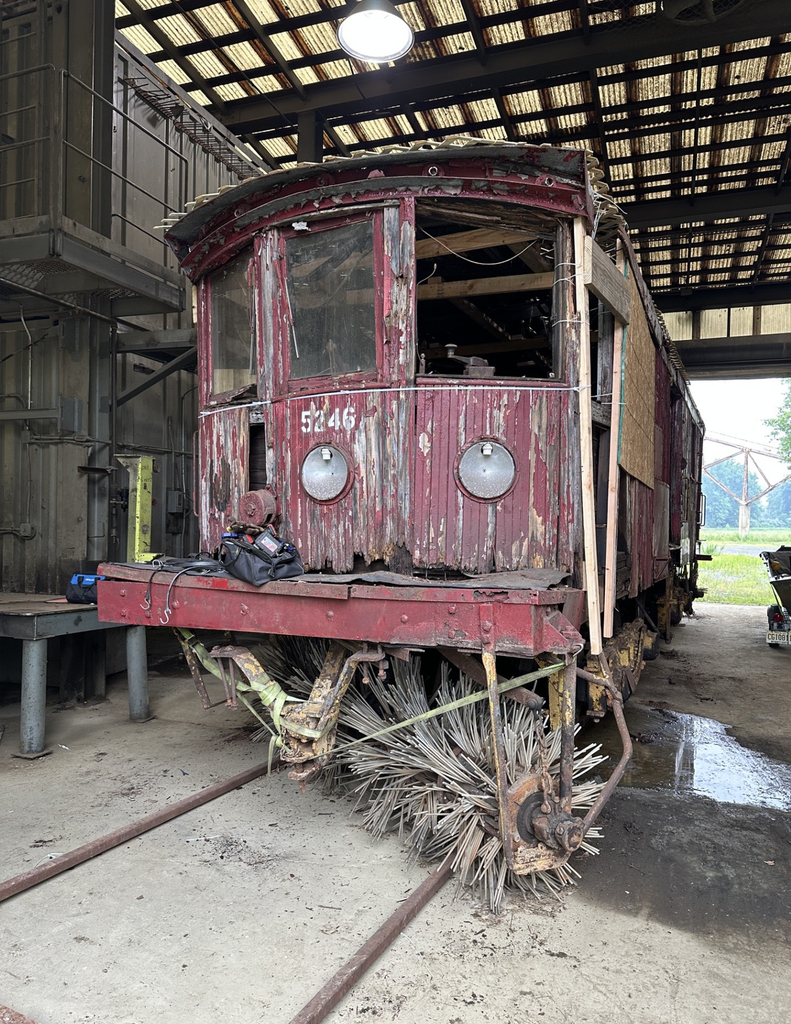
The second vehicle, a railway snow sweeper, represents another aspect of trolley operations. Unlike passenger cars, snow sweepers were designed to remove snow and ice from the tracks, helping keep electric rail service operating through New Jersey winters.
Liberty Historic Railway is leading the restoration work in partnership with the county.
“These cars are tangible reminders of an important period in the development of Mercer County and New Jersey,” said J. R. May, executive director of Liberty Historic Railway. “Restoring them is a significant undertaking, and community volunteers can play an important role in helping us preserve them. Whether you have restoration experience or simply an interest in history and a willingness to learn, we would love to hear from you.”
The organization is seeking volunteers with experience in woodworking, carpentry, metalworking, electrical work, painting, historic preservation and mechanical restoration. No specialized experience is required, however, and residents interested in local history are encouraged to participate.
The restoration project comes as Mercer County continues efforts to preserve another part of its electric railway history through the Johnson Trolley Line Trail, which follows portions of a former trolley route through Ewing and Lawrence.
The county has not identified the original routes of the two trolley cars being restored, and there is no indication that either operated on the Johnson Line. However, the line’s history illustrates the importance electric railways once held in the region.
At the turn of the 20th century, electric trolleys were transforming travel throughout New Jersey. The lines offered an alternative to horse-drawn transportation and helped connect communities that had previously been separated by long carriage trips.
One of Mercer County’s best-known routes was the Johnson Trolley Line, which connected Trenton and Princeton through Ewing and Lawrence.
Construction of the line began in February 1899 near Ingham Avenue in Trenton. The tracks eventually extended through Lawrenceville toward Stony Brook, just outside Princeton.
The railway was acquired in 1901 by Albert L. Johnson, president of the Lehigh Valley Traction Company of Allentown, Pennsylvania, who had much more ambitious plans for the route.
Johnson envisioned a high-speed electric railway connecting Philadelphia and New York City, with Mercer County serving as an important link between the two cities.
Johnson died only a few months after purchasing the railway, and his larger transportation project was never completed. However, improvements made in anticipation of the proposed high-speed service helped establish the line as an important transportation route.
A steel bridge was constructed over Stony Brook, allowing the tracks to reach Witherspoon Street in Princeton, while the Trenton portion of the railway was extended to West Hanover Street.
On Nov. 17, 1901, the first trolley successfully traveled the approximately 15 miles between Trenton and Princeton in less than 40 minutes.
According to research by Lawrence Township historian Dennis Waters, the trip previously took about an hour, making the trolley a significant improvement for travelers.
The railway, originally known as the Princeton Fast Line, quickly became part of everyday life in communities along its route.
Its arrival even attracted attention from The New York Times, which reported in July 1902 that some observers believed the new transportation connection would end Princeton University’s relative isolation by bringing visitors from Trenton to the campus.
The trolley also became a convenient way for Princeton students to travel into Trenton on weekends.
For nearly four decades, the Johnson Line carried passengers between the communities. But the growing popularity of automobiles gradually reduced demand for trolley service.
Passenger operations ended in 1940, although the railway continued carrying freight between Trenton and Lawrenceville for another 34 years. That service ended in 1974 as trucking increasingly replaced rail transportation.
With the line abandoned, portions of the former railway corridor gradually became overgrown.
Decades later, officials and residents in Lawrence and Ewing began working to reclaim the route as a recreational trail.
Lawrence Township began rehabilitating sections of the Johnson Trolley Line Trail in 2006, creating pathways for pedestrians and bicyclists along portions of the old railway.
The trail was divided into two sections by Interstate 95, now Interstate 295. Its southern section extended from Shabakunk Creek to the highway, while the northern section ran from Denow Road to Gordon Avenue.
Ewing followed with its own restoration project, using Lawrence’s improvements as a model.
Before the work began, portions of Ewing’s trail were little more than an abandoned dirt road, with potholes, weeds and overgrown vegetation obscuring the former railway corridor.
Volunteers had worked to clear sections of the pathway before the township received a Recreational Trails Program grant in 2012 to help complete the improvements.
On June 4, 2016, National Trails Day, then-Mayor Bert Steinmann and other township officials celebrated the opening of the restored Ewing trail, which extended from Shabakunk Creek past Whitehead Road Extension to Fifth Street.
The project provided a recreational connection between Ewing and Lawrence while preserving the route of a railway that had helped shape both communities more than a century earlier.
Mercer County is continuing work to restore portions of the former right-of-way as part of the Johnson Trolley Line Trail.
The Johnson Line was not the only electric railway to leave a lasting mark on the region.
Another route, known as the Trenton-New Brunswick Fast Line, traveled through West Windsor and Plainsboro, connecting communities along a 27.2-mile route between Trenton and New Brunswick.
A 2010 article in the West Windsor-Plainsboro News described how passengers could once board the trolley on Warren Street in Trenton and travel to New Brunswick for 47 cents, although the journey took approximately five hours.
PSE&G purchased the former railway corridor in 1937 and later installed electrical transmission lines along the route. The utility maintained the land beneath the wires to provide access for maintenance vehicles.
Decades later, West Windsor negotiated an agreement with PSE&G to develop a 2.5-mile section of the former railway into the Trolley Line Trail, extending from Rabbit Hill Road near Cranbury Neck Road to Penn Lyle Road near Village Road West.
Then-Mayor Shing-Fu Hsueh, who took office in 2001, championed the project and spent approximately three years negotiating permission from the utility company.
One of the trail’s most recognizable features is the Pig Town Bridge, which crosses Big Bear Brook near West Windsor Community Park.
The original railway bridge had been removed after trolley service ended, but its stone abutments remained. In 2007, a new pedestrian bridge was constructed using those original supports, preserving a visible connection to the railway’s past.
The project received approximately $200,000 in federal funding with assistance from then-U.S. Rep. Rush Holt.
The bridge takes its name from Pig Town, a former trolley stop near Route 571.
Efforts to extend the pathway into Plainsboro encountered obstacles, including PSE&G’s reluctance to permit additional construction beneath its transmission lines and concerns from neighboring property owners about safety and trespassing.
The West Windsor and Johnson trolley trails follow different historic railway corridors, but both illustrate how former transportation routes have been adapted for recreational use.
The restoration of the two trolley cars complements those efforts by preserving examples of the actual vehicles that once operated on the region’s electric railway system.
Liberty Historic Railway, established in 2010, supports railway preservation projects throughout New Jersey through grants, financial assistance and direct participation in restoration work.
“Whether we are restoring the trolley cars themselves or preserving the corridors where they once traveled, these projects give us an opportunity to connect Mercer County’s past with its future,” Benson said. “The Johnson Trolley Line Trail is a great example of how historic preservation can also create something that residents can experience and enjoy every day.”
The county has not announced a timetable for completing either trolley restoration or indicated where the finished vehicles will be displayed.
For now, the immediate goal is to recruit volunteers who can help preserve the cars for future generations.
Residents interested in participating can contact May at jrmay@m3monmouth.com or visit LHRy.org.
Volunteer work sessions are generally announced by email and through the organization’s Facebook page at facebook.com/LibertyHistoricRailway.
For one of the trolley cars, the project represents an especially unusual journey: from operating on an electric railway more than a century ago, to spending decades concealed inside a Hamilton Township house, to becoming part of an effort to preserve Mercer County’s transportation history.

