

By Sue Kozel
As we age, sometimes we may reflect, “What could I have done differently?”
For me, these questions drive my continuing research and writing. Since my mid-40s, I have tackled questions surrounding why the Black history of African Americans living in Upper Freehold, Allentown and sometimes Millstone during the Colonial and Revolutionary War periods and their aftermath appears invisible.
The next question that drove my historical research was, “How do we excavate African American history from limited records?” Now, my focus has shifted to, “How do we honor the memories of African Americans during America 250 and afterward who have often been left out of historical narratives?”
For example, I wondered why our area history tends to focus primarily on the Underground Railroad and not as much on the existence of enslavement in our communities. To address that concern, I have dedicated more than 25 years to researching slavery, abolition, murder and freedom, primarily in Allentown and Upper Freehold, as they affected our area’s African American residents.
Further complicating this issue is that Upper Freehold Township once included Allentown and parts of what are now Jackson and Millstone.
By being open to archival research and not prejudging what I could or would find, stories emerged that were unexpected.
I learned about an enslaved African woman named “Wench Betty,” who was also listed as Betty Lathen in court documents. On Thursday, Oct. 22, at the Liberal Arts & Humanities Center at Mercer County Community College, I will present Betty’s story as we know it. She was enslaved and murdered by Upper Freehold Revolutionary War veteran Arthur Barcalow.
The talk, “Why Wench Betty’s Life Matters: An Enslaved Woman in Upper Freehold, NJ, Murdered by Her Owner in 1784,” will explore how her murder provides insight into the lives of enslaved African Americans during the early American republic.
Often, the lives of enslaved people during this period are disregarded. The talk will educate participants about the state of slavery in New Jersey at the time of Wench Betty’s death and provide an opportunity to explore the powerful Revolutionary War ideas of freedom and liberty at a time when slavery still existed in the state.
Through an examination of court documents and slave records, participants will gain a deeper understanding of Wench Betty’s life and all the ways it mattered.
The program, co-sponsored by the MCCC Holocaust, Genocide and Human Rights Center, will take place from noon to 1 p.m. in Room CM 108 on the MCCC campus. For more information, email Dr. Craig Coenen at coenenc@mccc.edu.
How does exploring Betty’s murder provide insight into the lives of enslaved African Americans during the early American republic?
To illustrate the historical complexities of living in enslavement in a Northern state, my talk at Brookdale Community College on Friday, Oct. 23, as part of the free Brookdale Slavery Project Symposium, will draw on findings from grant-funded and expanded research.
The Brookdale Slavery Project Symposium 2026 will take place in the Navesink Rooms of the Warner Student Life Center at Brookdale Community College in Lincroft from 8:30 a.m. to 2 p.m.
Wench Betty’s life and death will be placed in the context of 2,865 African Americans, enslaved and free, named and unnamed, recorded in various records as living in Upper Freehold and Allentown from 1770 to 1839.
This is a “living” list, to which new people will be added over time. Often, in New Jersey tax ratable records held by the New Jersey State Archives, enslaved African Americans are counted as numbers without names and listed under their owners’ records.
Do you know any of these surnames of area free African Americans: Wobe, Wooby, Coward, Holmes, Thompson, Hendrickson, Binn, Cole, Nixon and Stout, for example?
Sometimes a free Black person shared a surname with an owner, and sometimes not. There are 68 full names of African American men and women included in the 1830 census. Sometimes the spelling of a surname today differs from how names are listed in tax records, so try several versions.
In a few instances, including the 1784 slave census numbers recorded in the Upper Freehold tax ratables, records list the number of enslaved African Americans regardless of gender or age, along with a column for African American males, including younger enslaved men.
Also, because we had prominent abolitionists in our area, including Quaker Richard Waln prior to the Underground Railroad period, we can see how the communities moved, slowly, from enslavement toward supporting freedom through activism, Black people escaping slavery, and freedom obtained through court documents and wills.
As we look at available records from the late 1780s through 1808, we find an emerging and sizable free Black community, sometimes with surnames. Later census records include even more African Americans by name.
For example, in the 1830 census, 451 African Americans lived in Upper Freehold, the overwhelming majority of them free, while 18 were enslaved. Upper Freehold at that time included Allentown, part of the township known today as Jackson in Ocean County, parts of Millstone in Monmouth County and a small part of today’s Plumsted.
The census recorded 18 African Americans enslaved by white heads of household.
It also listed 68 free Black heads of household, 61 men and seven women. Those heads of household and their residents accounted for 303 African Americans. One household included a white woman.
Another 130 free Black residents were living in white households.
In all, the 451 African Americans recorded in the 1830 census constituted 9.4% of Upper Freehold’s total population of 4,826.
The records show us the growing number of African Americans living free from enslavement, including several men who owned more than 50 acres of land each.
If we want to “see” history, we can choose to do so.
Thanks to the New Jersey Historical Commission, the New Jersey Council for the Humanities and the International Center for Jefferson Studies, I have been given support to share this research and history.
Thanks also to The Allentown Village Initiative for its support during America 250 and for allowing my research to be shared with residents of greater Upper Freehold and Allentown.
Finally, thanks to all the people who have shared tips with me, disagreed with findings, shared names or ideas, asked me to speak and hosted the “Say Our Names” research report on the TAVI website so individuals can visit, review the findings and share new information.
Feel free to share stories or names of local African Americans with me on Facebook or by email at suekozel@gmail.com.
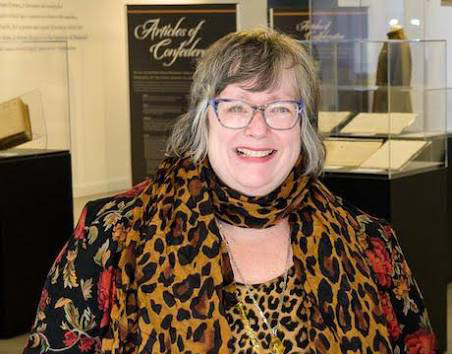
Sue Kozel is a happy, creative historian who loves hearing people’s stories. Having received several grants and a fellowship with the International Center for Jefferson Studies, she studies complicated histories and strives to tell the full, diverse story. During the America 250 commemorations in 2025 and 2026, she will have spoken at 10 local, county, statewide and national programs or conferences about slavery, freedom, peace, social justice and human rights.

