A microforest is about to take root in Quarry Park.
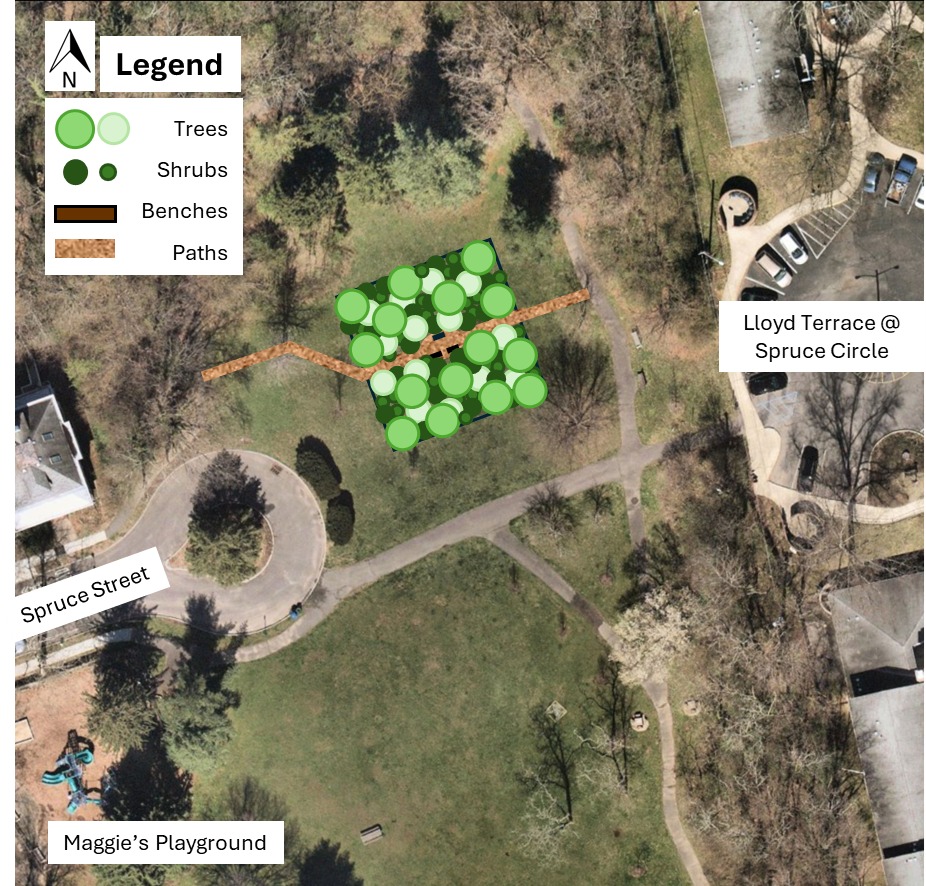
Princeton officials are planning to embark on a project that would recreate a small forest in the middle of the park, which is located at the end of Spruce Street.
The forest would be planted in a 5,000-square-foot area that is presently a grassy area, officials said. It would include about 1,500 native trees and shrubs.
“We are going to take an underutilized piece of land (in) an experiment to see how we can reforest the area,” said Deputy Administrator Deanna Stockton.
Quarry Park was chosen for the microforest project because it borders on the Princeton Housing Authority’s Spruce Circle affordable housing development, Princeton Councilwoman Eve Niedergang said.
Spruce Circle residents, as well as community members, would be able to enjoy the microforest, Niedergang said. A path is planned through the microforest. Benches would also be provided.
A microforest would provide many benefits to the community – from reducing air pollution to boosting local biodiversity and increasing soil health, officials said.
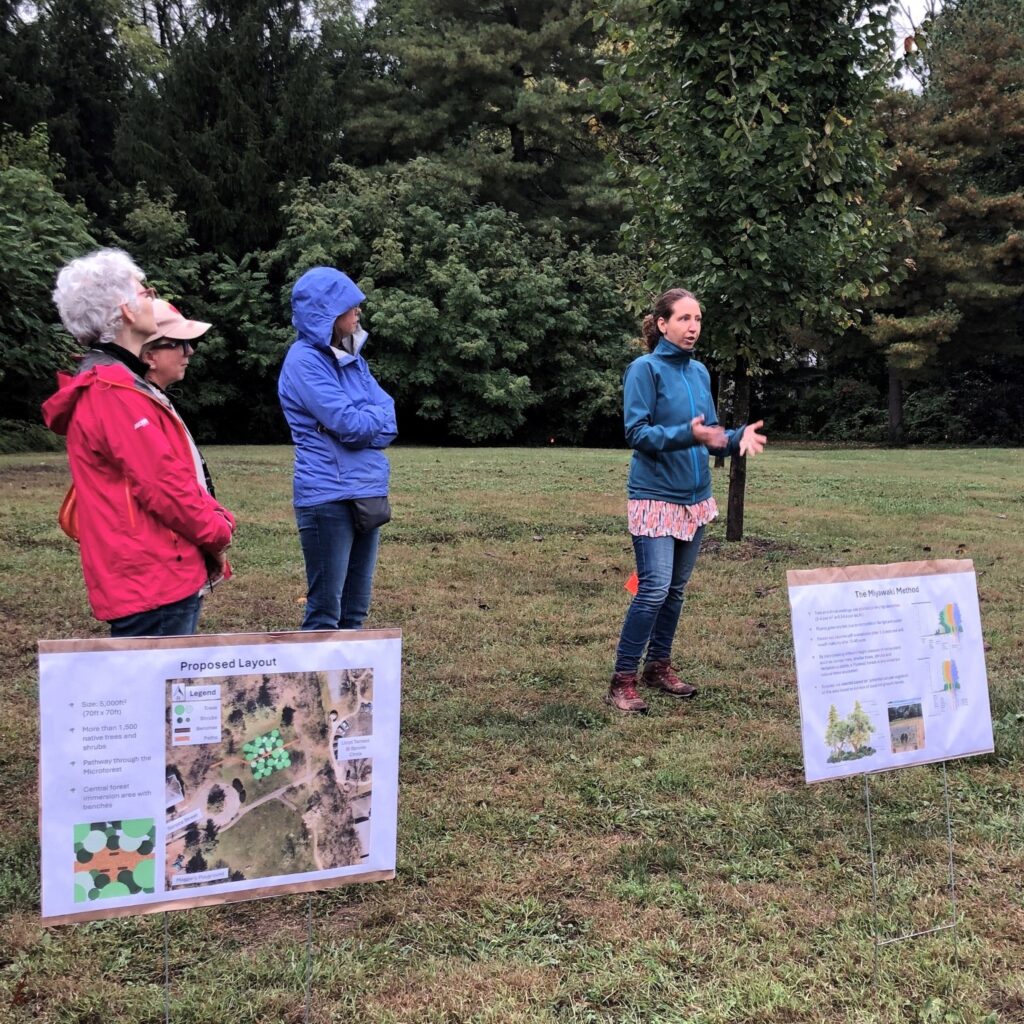
Planting the microforest would follow the Miyawaki method. It is based on experiments conducted by the late Japanese botanist Akira Miyawaki. He was an advocate for restoring natural forests.
The Miyawaki method calls for planting native trees and shrubs at very high densities, said Princeton Open Space Manager Inga Reich. It causes them to grow faster because of the competition for light and water.
Trees and shrubs of varying heights would be planted. Native species, such as hickory, oak and tulip poplars, reach about 60 feet in height at maturity. Smaller trees, such as the Eastern redbud, sourwood and American hornbeam reach heights of about 15 to 25 feet.
Incorporating taller canopy trees, smaller trees and shrubs, using the Miyawaki method, results in a forest that is very close to a natural forest ecosystem.
The microforest would become self-sustainable in about two or three years. It would reach maturity after 15 to 40 years.
Princeton officials have already mapped out a timeline to begin creating the microforest. There are many volunteer opportunities for residents who want to get in on the ground floor and help.
Volunteers could help with the first step, which is to remove some invasive species by pulling them out by hand. Herbicide would be used for other invasive plant species.
The next step, tentatively planned for next fall in 2025, is to help on planting day – planting the trees, watering them and applying mulch.
Volunteers can continue to help while the microforest establishes itself over the next few years by watering the trees and shrubs and removing weeds.
Residents who are interested in volunteering can contact Princeton Open Space Manager Inge Reich at ireich@princetonnj.gov.