

BY EMILY MELVIN
The Sun
The Association of New Jersey Environmental Commissions (ANJEC) hosted an Hour of Action webinar on June 29 to discuss the New Jersey Protecting Against Climate Threat Resilient Environments and Landscapes (NJPACT REAL) rules, their significance, and implementation status.
The event was co-sponsored by the Watershed Institute, American Littoral Society, Pinelands Alliance, and NJ Highlands Coalition, all of which work closely with the ANJEC team. ANJEC itself is a statewide non-profit organization focused on helping local commissions, agencies, and communities achieve sustainable use and protection of the state’s natural resources.
“[Hour of Action] is a series we started a little more than a year ago, because many other people and I were feeling awake and overwhelmed with the number of things we wanted to make a difference on and that we were being called to take action on,” said Jennifer Coffey, ANJEC executive director, at the start of the meeting. “So, we decided that on a quasi-monthly basis, we were going to identify one issue [to discuss].”
This month, the NJPACT REAL rules were discussed. The rules are intended to improve the safety and public health of environmental challenges regarding flood risk in the state. The rules will require updated development and infrastructure in natural and urban areas in the state that will act as safeguards from the effects of climate change and environmental challenges, which includes flooding, rising sea levels, extreme storms, and heatwaves.
All the speakers in the webinar stated the urgency of implementing these rules, as they will help the people, communities, and lands across the state. New Jersey is highly vulnerable to the effects of climate change and flooding, since it is surrounded by water and densely populated.
“We first need to recognize just how vulnerable New Jersey is,” said Danielle McCulloch, executive director of the American Littoral Society, a coastal conservation organization based in the Highlands. “I always say that the Garden State should be called the Coastal State, because we are literally surrounded by water. And in a state that’s so densely populated and so densely developed, being surrounded by water means that flooding should be a top priority from a public health and safety standpoint.”
McCulloch said that about 80 percent of the counties are considered coastal counties because of their relation to bodies of water, making flooding a pressing, wide scale issue. Additionally, flooding across the Pinelands, which is responsible for supplying drinking water and maintaining the health of its wetlands and forests, has damaging impacts to the environment and citizens.
Governor Mikie Sherrill and the Department of Environmental Protection (DEP) have proposed a one-year extension of the legacy period, which can delay the implementation of flood protection and stormwater management from July 20, 2026 to July 20, 2027 and rollback the regulations. The delay is intended to give developers time to further plan for action. However, the environmental groups view the delay as a dangerous decision; they say that action is needed now with the current rules in place.
After reviewing the details of the rules and the tolls the state is facing, and will continue to face, through worsening environmental issues, ANJEC and the fellow organizations encouraged attendees to fight against the delay. They provided guidance on how civilians can provide oral testimony at the July 7 NJDEP virtual public hearing. Additionally, they offered guidance on how to submit public comments in opposition of the delay on the NJDEP website by the July 31 deadline.
“The things that are critically important are not always always flashy and easy to talk about 30 seconds, but this is critically important,” Coffey said at the end of the webinar. “This is generational change. This is to protect us. This is kids, this is grandkids, this is generational systemic change.”
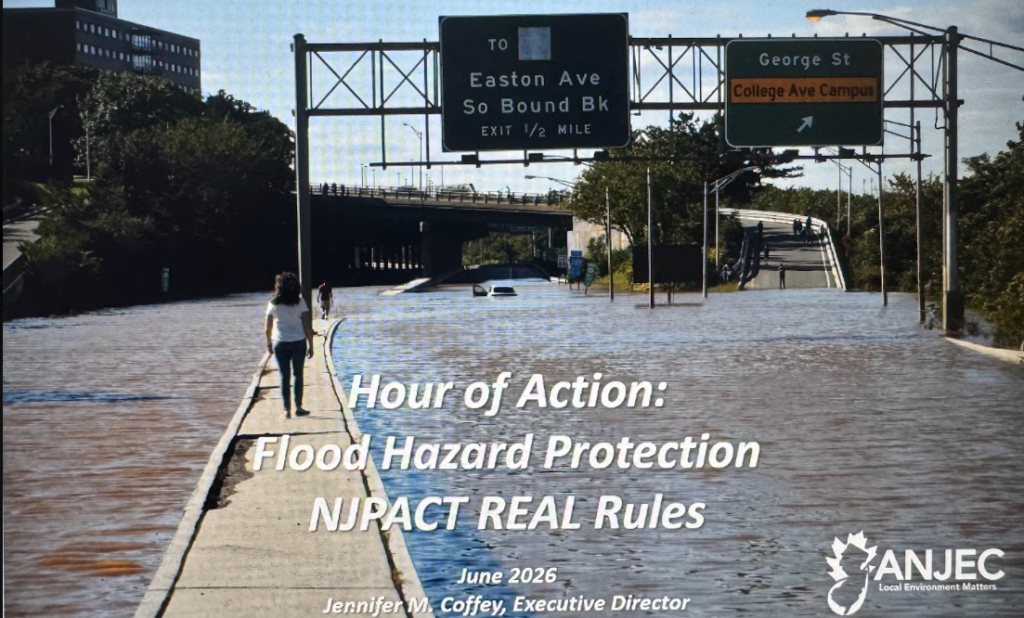
Title slide of the ANJEC webinar on June 29.

